Best of BS Opinion: Trump's tariffs generate differing global reactions

Our editorial page today addresses various topics, including global reactions to Trump's tariffs, the future of BIMSTEC, and a look at NVidia's CEO Jensen Huang
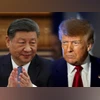
Xi Jinping, Donald Trump
Countries like China are not taking Trump's tariff hikes lying down, instead choosing to retaliate with duty hikes of its own
Tanmaya Nanda New Delhi
4 min read Last Updated : Apr 07 2025 | 6:15 AM IST
Hello and welcome to BS Views, our daily wrap of today's editorial pieces and columns. In sync with prevailing global worries, most of today's pieces look at Trump's tariff hikes, their impact, and possible responses from around the globe. We also take a closer look at the strategic BIMSTEC alliance and what India can do to get more out of it in terms of regional alliances. 
  Our lead editorial today looks at the world's reactions to US President Donald Trump's sweeping new tariffs. China has imposed a tit-for-tat tariff structure, but its production engine relies heavily on a supply chain that spans countries facing differential tariff rates. Some have caved and cut their own tariffs. History shows that such protectionism has upended global trade; it is not yet apparent how this round will play out. India, with its low exports to the US, is not as badly hit, but some buyers are already negotiating for discounts, which could hit working capital needs of domestic exporters. While India can offer to drop regulatory restrictions such as quality control orders and other non-tariff barriers, it would do well to gauge the US' deal-making approach while moving quickly on the proposed bilateral trade agreement. 
 
The largely BIMSTEC alliance, short for the Bay of Bengal Initiative for Multi-Sectoral Technical and Economic Cooperation, seems to showing signs of purpose with its Bangkok Vision 2030 that proposes a roadmap for regional prosperity, our second editorial notes. While India's vision of greater strategic cohesion aligns with its “Act East” policy to balance Chinese influence, it remains to be seen if BIMSTEC can meet those goals. Its main problem is its over-arching agenda. This could change if the group injected greater dynamism into its functioning. The growing power of China and the US tariffs are concentrating minds in regional capitals. As the largest economy in the bloc, much will depend on how India manages the process of cooperation.
 
Our columnist Debashish Basu looks at Trump's tariffs and the economic 'reasoning', if one may call it that, behind it, noting that it is extremely risky, like running blind on a tightrope. Significant costs will be passed on to US consumers and businesses, leading to an inflation spike and job losses. The most likely outcome of Trump's 'Liberation Day' is higher tariffs, but perhaps lower rates than what he has announced, but also with lower economic growth. This could lead to a recession, lower US tax revenues, new trade alliances with China at the centre, and continued uncertainty. 
 
Ajit Balakrishnan worries that banking on cheap Indian labour, which he had apprehensions about even in the '90s may soon come to haunt the Indian economy. Despite being home to some of the world's biggest companies, the US government actually makes very little revenue off their huge profits. Instead, it is heavily in debt, printing more bonds to cover the gap between its income and revenue. Any hint of a default will be chaotic for the world. To that end, he suggest following a model recommended by economists Raghuram Rajan and Rohit Lamba that calls for decentralised, grassroots-driven innovation, driven by an ecosystem suited for small and medium enterprises (SMEs). May be it is time for a radical rethink of India’s economic strategies and prepare for the new world, he says. 
 
The challenge of writing a book on the tech industry, notes Katie Notopoulos, and especially something as rapidly evolving as artificial intelligence, is that it will be somewhat dated by the time it hits bookstores. In her review of  Stephen Witt’s 'THE THINKING MACHINE: Jensen Huang, Nvidia, and the World’s Most Coveted Microchip', a biography of Jensen Huang, co-founder and head of NVidia, which makes microchips that power AI systems like ChatGPT, Notopoulos finds that the book misses the emergence of rivals like DeepSeek, which uses cheaper chips and sent NVidia's stock spiraling down. While it paints a faithful image of Huang, including his verbal abusiveness towards his employees, the book fails address the questions about how AI will change humanity. 
 
*Subscribe to Business Standard digital and get complimentary access to The New York Times

Smart Quarterly

₹900

3 Months

₹300/Month

SAVE 25%

Smart Essential

₹2,700

1 Year

₹225/Month

SAVE 46%
*Complimentary New York Times access for the 2nd year will be given after 12 months

Super Saver

₹3,900

2 Years

₹162/Month

Subscribe

Renews automatically, cancel anytime

Here’s what’s included in our digital subscription plans

Exclusive premium stories online

  • Over 30 premium stories daily, handpicked by our editors

Complimentary Access to The New York Times

  • News, Games, Cooking, Audio, Wirecutter & The Athletic

Business Standard Epaper

  • Digital replica of our daily newspaper — with options to read, save, and share

Curated Newsletters

  • Insights on markets, finance, politics, tech, and more delivered to your inbox

Market Analysis & Investment Insights

  • In-depth market analysis & insights with access to The Smart Investor

Archives

  • Repository of articles and publications dating back to 1997

Ad-free Reading

  • Uninterrupted reading experience with no advertisements

Seamless Access Across All Devices

  • Access Business Standard across devices — mobile, tablet, or PC, via web or app

More From This Section

Topics :Donald Trump tariff hikeTrump tariffsChinaUS TreasuryNvidiaartifical intelligence

First Published: Apr 07 2025 | 6:15 AM IST

Next Story