Home / Politics / Need 2nd gen economic reforms but inertia set in past 11 yrs: Cong on govt
Need 2nd gen economic reforms but inertia set in past 11 yrs: Cong on govt
The Congress leader alleged that due to the 'disastrous economic policies' of the Modi dispensation, 'which lacks both vision and action', the economy is reeling at a sub-par growth rate
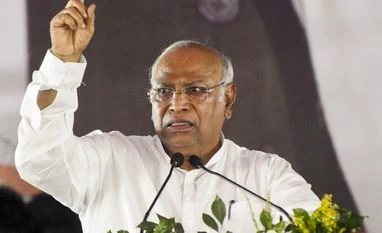
Congress takes immense pride in its economic liberalisation policies, an achievement that significantly spurred India's inclusive growth and helped lift crores out of poverty, Kharge said. (Photo:PTI)
2 min read Last Updated : Jul 24 2025 | 1:46 PM IST
Congress chief Mallikarjun Kharge on Thursday referred to the 1991 landmark liberalisation budget to say India urgently needed an impactful second-generation economic reforms, but an "inherent inertia" has set in the Narendra Modi government in the past 11 years.
He alleged that due to the "disastrous economic policies" of the Modi dispensation, "which lacks both vision and action", the economy is reeling at a sub-par growth rate.
"Inequality has widened, wage growth has miserably stagnated, household savings are getting depleted, youth do not have jobs, the middle class and poor are being robbed to help cronies, and we are facing a trade war, which would hurt both our agriculture and manufacturing sectors," Kharge alleged.
"Thanks to the disastrous economic policies of the Modi government, which lacks both vision and action," he said.
On the 34th anniversary of the presentation of the budget by then finance minister Manmohan Singh that ushered in economic liberalisation, Kharge said the 1991 budget was a "pivotal moment" for India, ushering in significant changes for the nation and its citizens.
"Under the guidance of PM P V Narasimha Rao and the then Finance Minister Manmohan Singh, India embarked on a transformative journey with a series of economic reforms that played a pivotal role in shaping the middle class for generations to come," he said on X.
The Congress party takes immense pride in its economic liberalisation policies, a landmark achievement that significantly spurred India's inclusive growth and helped lift crores out of poverty, Kharge said.
"Today, we once again face an urgent need for impactful, robust second-generation economic reforms. But even though these reforms are crucial to benefit both the middle class and the deprived, there is an inherent inertia that has set in the last 11 years to take bold decisions." The Congress has been attacking the Modi government over its handling of the economy, claiming the issues of rising prices, decreasing private investment, and stagnating wages were hitting the common people hard.
(Only the headline and picture of this report may have been reworked by the Business Standard staff; the rest of the content is auto-generated from a syndicated feed.)


 "Need 2nd gen economic reforms but inertia set in past 11 yrs: Cong on govt")

