Hailing India's ambitious space programme, The New York Times has said the country, currently home to about 140 registered space-tech start-ups, "stands to transform the planet's connection to the final frontier" and can emerge as a "counterweight" to China.
"When it launched its first rocket in 1963, India was a poor country pursuing the world's most cutting-edge technology. That projectile, its nose cone wheeled to the launchpad by a bicycle, put a small payload 124 miles above the Earth. India was barely pretending to keep up with the US and the Soviet Union. In today's space race, India has found much surer footing, the NYT article said.
The article titled 'The Surprising Striver in the World's Space Business' notes that India has become home to at least 140 registered space-tech start-ups, comprising a local research field that stands to transform the planet's connection to the final frontier."
"The start-ups' growth has been explosive, leaping from five when the pandemic started. And they see a big market to serve," the paper said.
Underscoring that India's "importance as a scientific power" is taking center stage, the NYT report referred to Prime Minister Narendra Modi's State Visit to Washington last month and the joint statement issued by the two sides that said the two leaders set a course to reach new frontiers across all sectors of space cooperation.
In the joint statement, "the leaders called for enhanced commercial collaboration between the US and Indian private sectors in the entire value chain of the space economy and to address export controls and facilitate technology transfer.
The NYT report added that both the US and India "see space as an arena in which India can emerge as a counterweight to their mutual rival: China."
"One of India's advantages is geopolitical, the paper said as it added that Russia and China had historically offered lower-cost options for launches.
"But the war in Ukraine has all but ended Russia's role as a competitor, it said as it cited the USD 230 million hit British satellite start-up OneWeb took after Russia impounded 36 of its spacecraft in September. OneWeb's next constellation of satellites was sent into orbit by India's Indian Space Research Organisation (ISRO).
"Likewise, the US government would be more likely to approve any American company's sending military-grade technology through India than through China," the NYT said.
It added that "Since June 2020, when Mr. Modi announced a push for the space sector, opening it up to all kinds of private enterprise, India has launched a network of businesses, each driven by original research and homegrown talent. Last year, the space start-ups raked in USD 120 million in new investment, at a rate that is doubling or tripling annually.
The NYT report mentions Hyderabad-based Skyroot Aerospace and aerospace manufacturer Dhruva Space.
"Skyroot and Dhruva work in the relatively sexy sectors of launch and satellite delivery, but together those account for only 8 per cent of India's space business pie.
"A much bigger slice comes from companies that specialize in collecting data beamed by satellite, the report said and cited the example of Bengaluru-headquartered start-up Pixxel, co-founded by Awais Ahmed and Kshitij Khandelwal and which has a contract with a secretive agency within the Pentagon.
Describing India as a thriving center of innovation and one of the most competitive launch sites in the world, the NYT article said space-tech start-ups are one of India's most sought-after sectors for venture capital investors and their growth has been explosive, leaping from five when the pandemic started.
Terming India's vendor ecosystem as staggering in size, the NYT said years of conducting business with ISRO has created about 400 private companies in clusters around Bengaluru, Hyderabad, Pune and elsewhere, each devoted to building special screws, sealants and other products fit for space."
Pawan Kumar Chandana, 32, Co-Founder and CEO, Skyroot Aerospace, anticipates a global need for 30,000 satellites to be launched this decade.
"We are more like a cab," said Chandana, whose company charges higher rates for smaller-payload launches, while Elon Musk owned SpaceX "is more like a bus or a train, where they take all their passengers and put them in one destination.

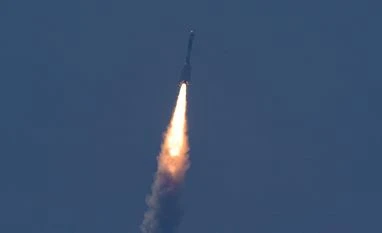 "India's space prog to transform planet's connection to final frontier: NYT")


 Connect with us on WhatsApp