Pixel 10 series' buyers report troubles with Qi2 wireless charging: Report
Early Pixel 10 buyers are reportedly facing issues with wireless charging, with some reporting that their devices have stopping mid-charge or charging slowly on Qi and MagSafe-compatible pads
Sweta Kumari New Delhi Don't want to miss the best from Business Standard?

Early buyers of
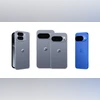
Google's Pixel 10 series are reportedly facing unexpected issues with wireless charging. While the phones in the series bring support for the latest Qi2 standard, some users have reportedly run into problems while charging their devices wirelessly. According to a report by 9To5Google, the devices either stop charging midway or crawl at unusually slow speeds, especially with older Qi and MagSafe-compatible chargers. These complaints are surfacing just as the Pixel 10 lineup begins reaching customers, raising concerns about charger compatibility.
According to the report, many users said that their
Pixel 10 (or Pro, or XL) phones begin charging but then stop after a few seconds or minutes. This makes charging unreliable and forces users to constantly check their devices. However, the issue is not widespread.
Another issue reportedly highlighted by the initial consumers of the Pixel 10 series is slow charging speeds through wireless. For some, the Pixel 10 only charges at around 5W on certain chargers, which is slower than the supported 15W that the Qi2 standard offers. This has been noticed with older Qi chargers, including Google’s own Pixel Stand (2nd Gen), as well as some MagSafe-compatible models.
As per the report, the reason may be linked to the Pixel 10’s support for the new Qi2 wireless charging standard. Qi2 has switched from “extended power profile” (EPP) to “magnetic power profile” (MPP). Both EPP and MPP support 15W charging, but the MPP relies on magnets to ensure the alignment is correct. If the two are not working seamlessly together, that could explain the slow or inconsistent charging. Although slower charging is a bit better for the phone’s battery health, it is certainly a bit of a problem if users are not aware of this.
For the Pixel Stand in particular, the report noted that the likely reason for slower charging is that Google’s semi-proprietary fast charging method has been updated to be a part of the Qi2 standard, so, likely, support for the prior Pixel Stand method is no longer in place. At this stage, it is unclear whether these problems will be solved with a software update or if some older chargers are simply incompatible.
*Subscribe to Business Standard digital and get complimentary access to The New York TimesSubscribeRenews automatically, cancel anytime
Here’s what’s included in our digital subscription plans
Exclusive premium stories online
Complimentary Access to The New York Times

News, Games, Cooking, Audio, Wirecutter & The Athletic
Curated Newsletters

Insights on markets, finance, politics, tech, and more delivered to your inbox
Market Analysis & Investment Insights
Seamless Access Across All Devices