Tech Wrap Oct 23: YouTube Shorts Timer, Google Pixel Buds, Adobe Indigo app
YouTube launches Shorts Timer. Google Store now sells Pixel Buds replacement parts. Adobe Indigo app on iPhone 17 series. Spotify on Android. iPhone to Android app data transfer
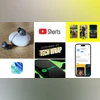
BS Tech New Delhi YouTube has reportedly rolled out a new Timer tool to help users manage their time on Shorts. As per a report by The Mint, the feature lets viewers set daily watch limits for Shorts within the app. When users hit their chosen time limit, the Shorts feed pauses automatically, and a message appears, reminding them that their daily viewing cap has been reached.
Google has made it easier for Pixel Buds owners to replace lost or damaged parts. The Google Store in India now lists “replacement” accessories for the Pixel Buds 2a, allowing buyers to order individual pieces—like a single earbud—instead of purchasing a brand-new pair.
Adobe has reportedly detailed why its Indigo camera app isn’t working on the iPhone 17 lineup. The app, launched earlier this year, aims to deliver natural, DSLR-style shots with minimal image processing. However, weeks after Apple’s latest phones debuted, Indigo still doesn’t function on iPhone 17 devices.
Spotify has acknowledged a problem causing its Android app to freeze or crash—but only when connected to Wi-Fi. According to 9to5 Google, the issue affects several users, particularly those using Samsung and Google devices, disrupting normal streaming over wireless networks.
Apple is working on a new framework called AppMigrationKit that will simplify transferring app data between iOS and Android. Currently in beta with iOS 26.1 and iPadOS 26.1, this marks Apple’s first system-level approach to help users move third-party app data to non-Apple devices.
Snapchat is expanding access to its “Imagine Lens,” the first open-prompt AI image generator, now free for all users. As per Snapchat’s blog, the Lens—originally available to paid subscribers—lets users transform Snaps with text prompts like “turn me into an alien” or “make a grumpy cat.”
Following Samsung’s Galaxy XR debut, Amazon has revealed its own pair of AI-powered smart glasses—designed specifically for delivery drivers. The company said the glasses integrate AI tools to help couriers scan packages, get navigation directions, and capture proof of delivery.
Google’s long-held dominance in search is facing growing challenges, driven by tools like Perplexity’s Comet browser and OpenAI’s Atlas. The pressure mainly stems from the rise of advanced transformer-based language models and increasing demand for more transparent links between browsers and search engines.
In a significant milestone for quantum computing, Google revealed that its new Quantum Echoes algorithm surpassed the speed of the world’s top supercomputers—achieving a performance that’s 13,000 times faster on its Willow quantum chip.

 "Tech Wrap Oct 23: YouTube Shorts Timer, Google Pixel Buds, Adobe Indigo app")


 Connect with us on WhatsApp