
Harvard vows reforms after internal reports on antisemitism, anti-Arab bias
In a campus message, Harvard President Alan Garber said Harvard has made necessary changes and essential progress over the last year but promised further action
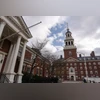 "Harvard vows reforms after internal reports on antisemitism, anti-Arab bias")
WebinarsNew
Deep DiveNew
Explore Business Standard
In a campus message, Harvard President Alan Garber said Harvard has made necessary changes and essential progress over the last year but promised further action
Harvard University is promising to review its academic offerings and admissions policies in response to a pair of internal reports on antisemitism and anti-Arab prejudice at the Ivy League campus commissioned in the aftermath of last spring's pro-Palestinian protests.
Harvard released the reports on Tuesday while the university simultaneously battles the Trump administration over demands to limit campus activism reforms the government says are necessary to root out campus antisemitism. The administration has frozen $2.2 billion in federal funding and Harvard responded with a lawsuit in a clash that is being watched closely across higher education.
In a campus message, Harvard President Alan Garber said Harvard has made necessary changes and essential progress over the last year but promised further action.
We will redouble our efforts to ensure that the University is a place where ideas are welcomed, entertained and contested in the spirit of seeking truth, Garber wrote.
Garber convened two panels to study campus antisemitism and anti-Muslim bias last year, with an initial round of recommendations released last June. The final reports total more than 500 pages and include dozens of recommended changes.
Harvard said it will begin implementing at least some of the recommendations, with potential updates to admissions, hiring and discipline systems.
US Representative Tim Walberg, chairman of the Education and Workforce Committee, said Harvard's internal reports suggest it tolerated antisemitism.
"Harvard's president said the school will not abide bigotry, yet that's exactly what the school's feckless leadership did, said Walberg, a Michigan Republican.
In a list of actions and commitments, Harvard said it will review admissions processes to make sure applicants are evaluated based on their ability to engage constructively with different perspectives, show empathy and participate in civil discourse.
It pointed to a recently added application question asking students about a time they strongly disagreed with someone. The antisemitism task force called for that kind of questioning, saying Harvard should reject anyone with a history of bias and look unfavourably on exhibitions of hostility, derision or dismissiveness.
Still, it appears to fall short of the Trump administration's demands around admissions, which called on Harvard to end all preferences based on race, color, national origin, or proxies thereof and implement merit-based policies by August. The Supreme Court has rejected the use of race in college admissions, but many colleges look at factors including students' family income and geography to bring a diverse class to campus.
Responding to complaints that Harvard's instruction had become too politicised and anti-Israel, the university said it will work to hold professors to new standards of excellence. Deans will make sure faculty promote intellectual openness and refrain from endorsing political positions that may cause students to feel pressure to demonstrate allegiance, the university said.
Courses and curriculum will also be reviewed to reflect those standards.
Other changes include required antisemitism training for students and staff, along with expanded academic offerings on Hebrew, Judaic, Arab and Islamic studies. Harvard will put money toward a research project on antisemitism along with a historical overview on Muslims, Arabs and Palestinians at the university.
In his message, Garber said Harvard will accelerate a campus-wide effort to promote viewpoint diversity, though he didn't elaborate. Viewpoint diversity is among the top concerns of the White House, which demanded that Harvard hire an external auditor to make sure the student body and every academic department represent diverse views.
Harvard is the first university to openly defy the Trump administration as it uses its hold on colleges' federal funding to press its political agenda.
The administration has argued that universities did not do enough to check antisemitism at campus protests last year. Garber has said Harvard will not bend to the demands, calling it a threat to academic freedom and the autonomy of all universities.
First Published: Apr 30 2025 | 7:34 AM IST


 Connect with us on WhatsApp