
Statehood for Palestine? The legal test, the war, and the global shift
Global calls for Palestinian statehood rise, but legal, political, and diplomatic roadblocks remain complex and contested
 "Statehood for Palestine? The legal test, the war, and the global shift")
WebinarsNew
Deep DiveNew
Explore Business Standard
Global calls for Palestinian statehood rise, but legal, political, and diplomatic roadblocks remain complex and contested
As the war in Gaza enters its twenty-second month, momentum is building across Europe to formally recognise Palestine as a sovereign state. With Canada, Britain, and France signalling readiness to endorse Palestinian statehood if Israel fails to agree to a ceasefire, the long-fraught legal and diplomatic battle for recognition has entered a pivotal phase. At the heart of the debate lies not only the humanitarian crisis in Gaza but also complex questions of territory, governance and global geopolitics.
Britain’s Prime Minister Keir Starmer on Tuesday said he would recognise statehood for Palestine if Israel failed to agree to a ceasefire by September. Starmer’s move comes days after France made a similar announcement. The Israel-Palestine war, which began on October 7, 2023, when Hamas launched coordinated attacks across Israeli borders, has dragged on for nearly two years with mounting casualties—mainly on the Palestinian side.
Both Britain and France have indicated they may formally recognise Palestine “at the right time”. The prolonged war has created a severe humanitarian crisis in Gaza, with widespread damage, food shortages, and attacks near aid distribution centres. Media reports continue to highlight the dire conditions, placing mounting pressure on Israel for a ceasefire.
143 of 193 UN member states recognise Palestine
The UN General Assembly granted Palestine non-member observer state status in 2012
The UN Security Council has blocked full membership due to repeated US vetoes
According to the Montevideo Convention (1933), an entity must fulfil four criteria to qualify as a sovereign state:
Defined territory
A clear geographical area, even with disputed borders. For instance, Israel was recognised in 1948 despite unresolved borders.
Palestine: West Bank and Gaza Strip qualify as significant territories.
Permanent population
A stable, resident population. Refugees don’t negate this requirement.
Palestine: Around 5.5 million people reside in West Bank and Gaza.
Functioning government
An administrative authority that enforces laws and maintains order.
Palestine: The West Bank is governed by the Palestinian Authority (Fatah), while Hamas controls Gaza—leading to fractured governance.
Capacity to engage in foreign relations
Ability to independently enter treaties and build diplomatic ties.
Palestine: Fatah-led administration has signed treaties and joined international organisations, but Hamas’s control in Gaza hinders a unified foreign policy.
While legal criteria for statehood are clear, diplomatic recognition by other countries—especially powerful ones—often determines legitimacy.
Recognition by sovereign nations
Recognition by global powers, especially permanent UN Security Council members, is pivotal.
Palestine: Recognised by 140 countries, but not by the US or other key veto holders.
UN membership and global bodies
Joining major international institutions adds weight to statehood claims.
Palestine: UN observer since 2012; full member of UNESCO, Arab League, and Organisation of Islamic Cooperation.
Stability and effectiveness
Stable governance and territorial control enhance credibility.
Palestine: Political split between Hamas and Fatah, and the ongoing war, challenge both stability and governance.
Humanitarian fallout in Gaza
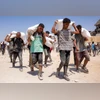
More than 650 days of war have created the worst humanitarian crisis in Gaza’s history, with thousands of deaths—mostly women and children—and limited access to aid. International outrage is growing.
Diplomatic frustration with Israel
Israel’s rejection of a two-state solution and continued strikes on aid sites have triggered global frustration. Some nations now see recognising Palestine as a way to pressure Israel diplomatically.
India officially recognised Palestine in 1988 and supports a two-state solution. It maintains diplomatic ties with both Israel and the Palestinian Authority. Recently, India backed a UN resolution to end Israeli occupation. However, due to trade and defence relations, India has refrained from criticising Israel directly.
If European powers recognise Palestine, it may push for full UN membership
Israel may retaliate diplomatically by recalling envoys or severing ties
The US veto power could still block full statehood, but prolonged humanitarian suffering will intensify global scrutiny of Israel’s actions
First Published: Jul 31 2025 | 12:49 PM IST


 Connect with us on WhatsApp