U.S. Federal Reserve Chair Jerome Powell told members of Congress on Tuesday that the central bank's current policy approach isn't meant to endorse or criticize the Trump administration's tariff plans, only to deal with the expected impact on inflation.
"We aren't commenting on tariffs," Powell told the Republican-led House Financial Services Committee. "Our job is keeping inflation under control, and when policies have short- and medium-term, meaningful, implications, then inflation becomes our job."
Powell was responding to questions from lawmakers suggesting that the Fed has been more proactive in anticipating inflation from rising tariffs than it was toward spending policies under the Biden administration. At the time the Fed did not anticipate those policies would boost inflation, and raised rates rapidly when prices started rising.
In response to suggestions from GOP members that rates should fall, as President Donald Trump has demanded, Powell said the outlook for higher inflation over the year is widely shared among economists.
"All professional forecasters I know of...expect a meaningful increase in inflation over the course of this year," Powell said, elaborating on the Fed's reluctance to cut rates while major aspects of Trump's trade policy remain unresolved.
Powell said the central bank needs more time to see if rising tariffs drive inflation higher before considering lowering rates.
"Increases in tariffs this year are likely to push up prices and weigh on economic activity," Powell said in testimony at the start of the hearing.
"The effects on inflation could be short-lived, reflecting a one-time shift in the price level. It is also possible that the inflationary effects could instead be more persistent...For the time being, we are well positioned to wait to learn more about the likely course of the economy before considering any adjustments to our policy stance."
Following the release of Powell's testimony investors pared bets that the central bank might cut its policy interest rate as soon as the central bank's July meeting, and increased the perceived odds for a rate reduction in September, with another to follow later in the year.
Powell's testimony, as is usually the case with his semiannual congressional appearances, largely tracks the central bank's most recent policy statement, approved last week. Fed officials voted unanimously at that meeting to hold the benchmark interest rate steady in the current 4.25% to 4.5% range, and gave no indication rate cuts were imminent.
New economic projections released at the time showed officials at the median expect two quarter-point rate cuts by the end of the year, in line with current market pricing.
In recent days two Fed governors, both Trump appointees, have said rates could fall as soon as the July meeting, given inflation has not yet risen in response to tariffs, while two reserve bank presidents say they still worry inflation will intensify over the rest of the year.
Trump, who appointed Powell as chair in his first term but is expected to replace him when his term ends next spring, has repeatedly called for steep rate cuts.
"We should be at least two to three points lower," he said in a social media post ahead of the hearing, adding in reference to Powell that he hoped "Congress really works this very dumb, hardheaded person, over."
Powell has built strong alliances in Congress over his three terms as Fed chair, often getting plaudits from Republicans and Democrats for his oversight of the Fed.
In his prepared testimony Powell said the economy remains in a "solid position," with low unemployment and inflation far below its pandemic-era peak.
But much about Trump's trade policies remains in flux, with a July 9 deadline approaching for higher tariffs on a large set of countries.
The outcome of that policy shift will be critical for the Fed to understand, Powell said.
"Policy changes continue to evolve, and their effects on the economy remain uncertain," Powell said.

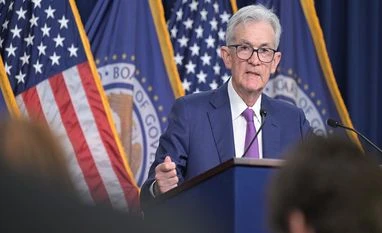 "Rate cuts can wait as Fed monitors inflation from tariffs, says Powell")


 Connect with us on WhatsApp