
SpaceX launch accident likely caused by fire, debris trails near Caribbean
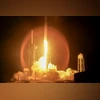
SpaceX suspects a fire may have caused its Starship to break apart during liftoff and send trails of flaming debris near the Caribbean.
 "SpaceX launch accident likely caused by fire, debris trails near Caribbean")
WebinarsNew
Deep DiveNew
Explore Business Standard
SpaceX suspects a fire may have caused its Starship to break apart during liftoff and send trails of flaming debris near the Caribbean.
SpaceX suspects a fire may have caused its Starship to break apart during liftoff and send trails of flaming debris near the Caribbean.
SpaceX's Elon Musk said preliminary indications are that leaking fuel built up pressure in the cavity above the engine firewall. The resulting fire would have doomed the spacecraft.
On Friday, the company promised "a thorough investigation" in coordination with the Federal Aviation Administration.
The 400-foot Starship the world's biggest and most powerful rocket launched from the southern tip of Texas on a test flight early Thursday evening.
The booster made it back to the pad for a catch by giant mechanical arms, only the second time in Starship history. But the engines on the still ascending spacecraft shut down one by one, and communication was lost 8 1/2 minutes into the flight.
Dramatic video taken near the Turks and Caicos Islands showed spacecraft debris raining down from the sky in a stream of fireballs. Flights near the falling debris had to be diverted.
SpaceX said Starship remained in its designated launch corridor over the Gulf of Mexico and then the Atlantic. Any surviving wreckage would have fallen along that path over water, the company said on its website.
Starship had been shooting for a controlled entry over the Indian Ocean, halfway around the world. Ten dummy satellites, mimicking SpaceX's Starlink internet satellites, were on board so the company could practice releasing them.
It was the seventh test flight of a Starship, but it featured a new and upgraded spacecraft. The booster and spacecraft for the eighth demo are already built and undergoing testing.
Musk said on X the accident was barely a bump in the road in his plans to build a fleet of Starships to carry people to Mars.
NASA already has booked two Starships to land astronauts on the moon later this decade under its Artemis programme, the successor to Apollo.
Spaceflight is not easy. It's anything but routine, NASA Administrator Bill Nelson posted on X after the accident. That's why these tests are so important." Earlier Thursday, Jeff Bezos' Blue Origin company also had mixed results with the debut of its massive New Glenn rocket. It achieved orbit on its first try, putting a test satellite thousands of miles above Earth. But the booster was destroyed after failing to land on a floating platform in the Atlantic.
First Published: Jan 17 2025 | 10:12 PM IST


 Connect with us on WhatsApp