Speaking virtually, Mehta said a growing middle class, a young population, and rising internet penetration would enable India to go back to pre-pandemic growth levels.
“What is good for India is good for Hindustan Unilever,” he said, pointing to an “intelligent enterprise” that the company was putting in place.
“The HUL of the future will be a web of intelligent ecosystems — the consumer ecosystem, customer ecosystem, operations ecosystem with data, technology, and analytics at the heart of it," he said. "Our core business will become smarter and efficient by becoming data-led and machine-augmented, while we create customised platforms and ecosystems for differentiated consumer and customer values, " he said. This will build a system that delivers scale and efficiency of the large while retaining the nimbleness of the small, he added.
Technology, Mehta said, was going to be the game changer, shaping societies as well as businesses. With education and medical facilities moving into the virtual space, it could be the key to broad-based development of human capital, making products and services more accessible and democratised, he said.
Since the onset of the pandemic, HUL had innovated and launched several new products and formats such as fabric sanitisers, fruit and vegetable wash, and anti-bacterial dishwashers.
Mehta said that through the acquisition of brands such as Horlicks and Boost, HUL had entered the important segment of nutrition and had also become one of the largest foods and refreshment businesses in the country.
Over 500,000 stores in India were using Shikhar – HUL's eB2B app - which had helped the company receive orders even when the salesmen could not reach the outlets during lockdowns.
"At HUL, there is a clear focus on learning priorities to make people future-fit and purpose-led. The new levels of uncertainty and volatility that we see around us require a fundamental shift in the way we work and the way we help our talent develop to face the challenges of the future,” he said.


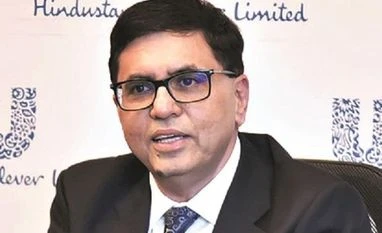 "Covid-19 pandemic just a pause in growth story: HUL CMD Sanjiv Mehta")

