


Reverse migration: Food-tech, e-commerce firms bring jobs closer to home
Many workers in metros now returning to hometowns for better quality of life
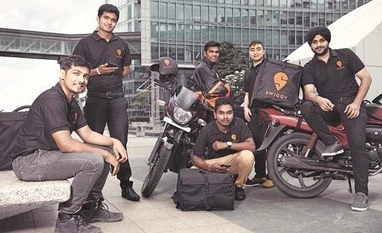 "Reverse migration: Food-tech, e-commerce firms bring jobs closer to home")
premium
In the early phase, job opportunities at e-commerce and food-tech companies attracted youth in smaller towns and semi-urban areas towards big cities and metros. But now with leading players in the sector rapidly expanding their footprint beyond the metros and, thus, creating jobs in smaller cities and towns, a ‘reverse migration’ is taking place.
Take the example of Madhu Kumar. Kumar, who hails from Mysuru, was working with Swiggy in Bengaluru when his mother had to undergo surgery back at home. The food delivery start-up helped him relocate to Mysuru and offered him a job there. Similarly, Flipkart accommodated Satish Mahale — who was earlier working in Bengaluru — into its newly introduced ‘City Logistics’ cluster in Karwar, his hometown.
Mahale needed to return to Karwar as his father was seriously ill and undergoing treatment.
Kumar and Mahale are just the two of hundreds of such workers and delivery partners employed with online commerce firms who are now able to find the same kind of job avenues closer to their hometowns.
Even many workers employed in other industries in metro cities, such as Bengaluru, Mumbai and Delhi, are returning home to work with e-commerce and food-tech companies for a better quality of life and affordable cost of living.
“Now that Swiggy is rapidly expanding across the country, we’re noticing a nice trend where delivery partners, who have been with us in the metros for over two-three years, are opting to return to their hometowns to manage our operations there,” said Srivats T S, vice president-marketing, Swiggy. “Over the past year, hundreds of our delivery partners have moved back to their hometowns because of Swiggy’s presence there.”
Naspers-backed Swiggy, which has a fleet of around 200,000 active delivery partners across 200 cities, is rapidly expanding its footprint and is launching its services in one new city or town in almost every two days. In a city like Bengaluru, the earning potential for a food-delivery partner at Swiggy is about Rs 25,000- Rs 30,000 per month, according to sources. In smaller towns, it about Rs 20,000 per month but the cost of living there is much cheaper, reverse-migration has become an attractive option.
Take the example of Madhu Kumar. Kumar, who hails from Mysuru, was working with Swiggy in Bengaluru when his mother had to undergo surgery back at home. The food delivery start-up helped him relocate to Mysuru and offered him a job there. Similarly, Flipkart accommodated Satish Mahale — who was earlier working in Bengaluru — into its newly introduced ‘City Logistics’ cluster in Karwar, his hometown.
Mahale needed to return to Karwar as his father was seriously ill and undergoing treatment.
Kumar and Mahale are just the two of hundreds of such workers and delivery partners employed with online commerce firms who are now able to find the same kind of job avenues closer to their hometowns.
Even many workers employed in other industries in metro cities, such as Bengaluru, Mumbai and Delhi, are returning home to work with e-commerce and food-tech companies for a better quality of life and affordable cost of living.
“Now that Swiggy is rapidly expanding across the country, we’re noticing a nice trend where delivery partners, who have been with us in the metros for over two-three years, are opting to return to their hometowns to manage our operations there,” said Srivats T S, vice president-marketing, Swiggy. “Over the past year, hundreds of our delivery partners have moved back to their hometowns because of Swiggy’s presence there.”
Naspers-backed Swiggy, which has a fleet of around 200,000 active delivery partners across 200 cities, is rapidly expanding its footprint and is launching its services in one new city or town in almost every two days. In a city like Bengaluru, the earning potential for a food-delivery partner at Swiggy is about Rs 25,000- Rs 30,000 per month, according to sources. In smaller towns, it about Rs 20,000 per month but the cost of living there is much cheaper, reverse-migration has become an attractive option.