What is this South African variant?
The variant has been termed B.1.1.529 and according to preliminary data it has many mutations across different parts of the virus. Scientists in South Africa have detected over 30 mutations to the spike protein. Spike protein is that part of the virus which binds to cells in the body. Several mutations to the spike protein can thus have implications for vaccine efficacy and transmissibility.
What is the current spread of this variant?
According to the National Centre for Disease Control, multiple cases of a Covid-19 variant 8.1.1529 have been reported in Botswana (3 cases), South Africa (6 cases) and Honk Kong (1 case). Israel is the latest country to have detected the variant.
In South Africa it has been detected in Guateng province - positivity rates in Tshwane (part of Guateng) have increased massively in the last 3 weeks from less than 1 per cent to over 30 per cent. South African’s authorities sais in a recent press conference that its cases have increased manifold from 273 infections on November 16 to around 1,200 on November 24.
Even though much more genomic sequencing needs to be done before we have definitive answers some experts have said that the variant seems to spread very quick. Tulio de Oliviera, director of Centre for Epidemic Response and Innovation, South Africa said “In less than two weeks now (B.1.1.529) dominates all infections following a devastating Delta wave in South Africa.”
Tom Wenseleers, Biology and biostatistics professor, KU Leuven University said in a tweet, “With a generation time of 4.7 days of the virus that would imply a 6 fold higher R value than Delta, if that would even be possible. To be confirmed, but not looking good.”
It is however, still early days to assess if this variant is more lethal or transmissible. Health experts caution that vaccination and covid appropriate behaviour are the best protection available to us right now.
Will this impact vaccine efficacy and therapeutics?
Experts say that antivirals (like remdesivir and favipiravir) would continue to work as they do not specifically target the spike protein alone. Jacob John, former head of Centre for Advanced Research in Virology at the Indian Council of Medical Research (ICMR) said, “Antiviral treatment will have no change. Spike protein change may affect the immunity protection. Currently, all vaccines are protected against variants with slight variations. This is what may happen with this new variant. Vaccine immunity may be less effective,” he explained. He felt if a booster dose of the vaccine is given then it may improve the immune response, but this has to be studied and demonstrated.
What action has India taken?
India has asked states to ensure that all international travellers travelling from and transiting through these countries and other at-risk countries are subjected to rigorous screening and testing. The contacts of these international travellers must also be closely tracked and tested as per health ministry guidelines.
What are other countries doing?
Bloomberg reports said that the UK issued a temporary ban on flights from six African countries, and Australia said it wouldn’t rule out tightening border rules for travelers from southern Africa if the situation escalates. A report by AFP said that the European Union too would propose banning flights from southern Africa over Covid variant.
What is the WHO doing?
The World Health Organisation (WHO) is monitoring the new variant closely and has scheduled a special meeting on Friday to discuss what it means for vaccines and treatments available.
Dr Maria Van Kerkhove, technical head on Covid19, WHO said, “We don’t know very much about this yet. What we do know is that this variant has a large number of mutations. And the concern is that when you have so many mutations, it can have an impact on how the virus behaves.” In a post on micro-blogging site twitter, the WHO official noted that researchers are getting together to understand what this potentially means for our diagnostics, therapeutics and our vaccines.


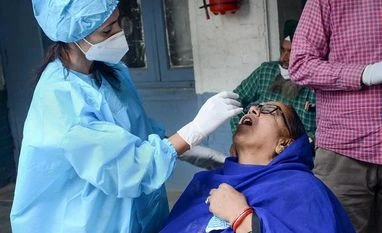 "coronavirus, covid")