


Govt looking at final bill after cabinet okays funds for 3 insurance firms
The companies would soon announce the formation of joint Lok Adalats as well as take the help of the insurance Ombudsman
 "insurance,state-run insurance firms")
premium
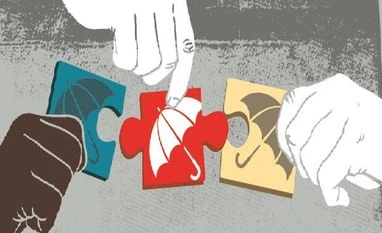
Illustration: Ajay Mohanty
After the Cabinet approved a Rs 2,500-crore infusion into three state-owned general insurance companies on Wednesday, the finance ministry is hoping the additional bill will be far lower than Rs 6,950 crore pencilled in by Budget 2020-21.
The CMDs of the three companies, Oriental Insurance, United India Insurance and National Insurance have been advised by the government to quickly bring their claims settlements in each line of business — motor, health and fire — in sync with each other. The companies would soon announce the formation of joint Lok Adalats as well as take the help of the insurance Ombudsman. This would bring the claims handling departments of the three companies closer to each other’s best practice.
The CMDs have already held one round of meetings at the prodding of the department of financial services. “The exercise will also tell us more accurately how much of their money is locked up as provisioning for these cases,” said a government official, aware of the developments. This will determine how much money the government may need to provide the merged entity to bring its solvency ratio in line with the yardsticks of the insurance regulator, the Insurance Regulatory and Development Authority of India (Irdai).
Finance Secretary Rajiv Kumar recently said the merger would happen next year. The finance ministry had provided the Rs 2,500 crore through the first supplementary demands for grants for 2019-20, which has been cleared by the Cabinet now. This is the first time ever when the government has had to put money into the insurance companies as their owner. Going ahead while each company has put up a large bill towards merger, the ministry feels the additional support needed would be reasonable. It will depend on improving what is called the solvency ratio, a measure of the balance between assets and liabilities of the companies.
The CMDs of the three companies, Oriental Insurance, United India Insurance and National Insurance have been advised by the government to quickly bring their claims settlements in each line of business — motor, health and fire — in sync with each other. The companies would soon announce the formation of joint Lok Adalats as well as take the help of the insurance Ombudsman. This would bring the claims handling departments of the three companies closer to each other’s best practice.
The CMDs have already held one round of meetings at the prodding of the department of financial services. “The exercise will also tell us more accurately how much of their money is locked up as provisioning for these cases,” said a government official, aware of the developments. This will determine how much money the government may need to provide the merged entity to bring its solvency ratio in line with the yardsticks of the insurance regulator, the Insurance Regulatory and Development Authority of India (Irdai).
Finance Secretary Rajiv Kumar recently said the merger would happen next year. The finance ministry had provided the Rs 2,500 crore through the first supplementary demands for grants for 2019-20, which has been cleared by the Cabinet now. This is the first time ever when the government has had to put money into the insurance companies as their owner. Going ahead while each company has put up a large bill towards merger, the ministry feels the additional support needed would be reasonable. It will depend on improving what is called the solvency ratio, a measure of the balance between assets and liabilities of the companies.