


How scrap recycling has opened a door for steel makers to meet high demand
Tata Steel is making an entry into scrap recycling business to give a push to formalising the steel scrap generation industry for the benefit of secondary sector
 "steel")
premium
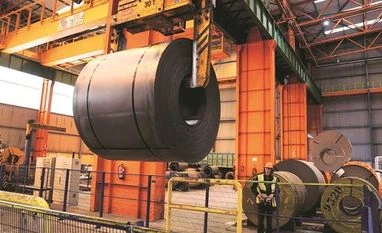
Representative Image
Tata Steel made all its 16.81 million tonnes (mt) of crude steel in India last year through the primary blast furnace-basic oxygen furnace (BF-BOF) route. The company’s production capacity at Kalinganagar in Odisha is being enhanced from 3 mt to 8 mt by way of installing a 5,800 cubic metre BF, to be the largest in the country. Its entire targeted capacity expansion to 30 mt by 2025 is likely to be produced via the BF-BOF channel. Even then, Tata Steel acknowledges the secondary sector that includes electric arc furnaces (EAFs) and induction furnaces (IFs) where ferrous scrap is the principal raw material will have an important role in meeting the country’s growing demand for steel in a “sustainable manner.”
Citing examples of many countries where “very efficient” relatively small plants in the secondary sector exist focusing on production of “very high quality special steels” in small lot sizes of “40 to 80 tonnes,” Tata Steel CEO and Managing Director TV Narendran says: “We in India need to have a very strong secondary sector... There are roles that are specially cut out for the secondary sector like servicing customers who will be difficult to reach for the primary sector. I don’t think the country’s steel industry can prosper with just a few large steel plants. Ideally, the primary and secondary sectors should grow in parallel and both will have to be world class in efficiency, cost and product quality.”
Though not the first to be off the block in steel recycling business — that honour goes to a Mahindra and MSTC joint venture, which already has in operation two units in Greater Noida and Chennai — Tata Steel is making an entry into scrap recycling business to give a push to formalising the steel scrap generation industry for the benefit of secondary sector. The 500,000-tonne recycling plant that Tata Steel is building near Delhi on build, own and operate basis will be ready for commissioning during this financial year. Steel recycling is part of the company’s attempt to generate 30 per cent revenue from non-core businesses. Many are seeing in Tata Steel’s entry into recycling work the first step to build secondary mills in different parts of India to tap markets far removed from Jamshedpur and Kalinganagar. Smaller mills will enable the company to make small parcels according to requirements of buyers.
Citing examples of many countries where “very efficient” relatively small plants in the secondary sector exist focusing on production of “very high quality special steels” in small lot sizes of “40 to 80 tonnes,” Tata Steel CEO and Managing Director TV Narendran says: “We in India need to have a very strong secondary sector... There are roles that are specially cut out for the secondary sector like servicing customers who will be difficult to reach for the primary sector. I don’t think the country’s steel industry can prosper with just a few large steel plants. Ideally, the primary and secondary sectors should grow in parallel and both will have to be world class in efficiency, cost and product quality.”
Though not the first to be off the block in steel recycling business — that honour goes to a Mahindra and MSTC joint venture, which already has in operation two units in Greater Noida and Chennai — Tata Steel is making an entry into scrap recycling business to give a push to formalising the steel scrap generation industry for the benefit of secondary sector. The 500,000-tonne recycling plant that Tata Steel is building near Delhi on build, own and operate basis will be ready for commissioning during this financial year. Steel recycling is part of the company’s attempt to generate 30 per cent revenue from non-core businesses. Many are seeing in Tata Steel’s entry into recycling work the first step to build secondary mills in different parts of India to tap markets far removed from Jamshedpur and Kalinganagar. Smaller mills will enable the company to make small parcels according to requirements of buyers.