


Keeping eye on global inflation pressure, says FM Nirmala Sitharaman
'Global price of fuel is now a concern for all of us', FM said
 "Illustration")
premium
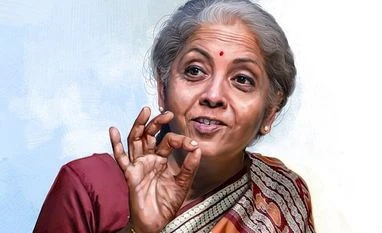
Union Finance Minister Nirmala Sitharaman | Illustration: Ajay Mohanty
4 min read Last Updated : Feb 07 2022 | 12:15 AM IST
The government is tracking global developments, including inflationary pressure because of the rise in commodity prices and expected monetary tightening by central banks, and will not allow the Indian economy to suffer due to these headwinds, Union Finance Minister Nirmala Sitharaman said on Sunday.
"Now with the RBI and the government working together and very keenly observing what is going on in the global financial ecosystem, we have learnt the lessons from the last crisis which the Government of India faced in 2012-13 and 2013-14,” Sitharaman said at an event organised by industry body Ficci.
“We are fairly watchful of what is happening as regards global strategic developments, as regards the Fed decision, and as also regards global inflationary pressures; we are keeping a very close watch, and I can assure the leadership here that we shall not allow the Indian economy to suffer for want of preparations,” she said.
Sitharaman said that India Inc should take advantage of the recovery taking place in the economy and step up its investment commitments. “We are at such a juncture where the revival of the economy is very clear... this recovery is, therefore, going to place India as the fastest growing economy among the larger economies and that would continue even in the next fiscal year. After the pandemic, the world order has changed and industry leadership should ensure that India doesn't miss the bus this time,” she said.
In her 2022 Union Budget, Sitharaman has announced a record capital expenditure outlay of Rs 7.5 trillion, including Rs 1 trillion as long-term interest-free loans to states for their capex needs.
The expectation in the government is that this will crowd in private sector investment, as well, which will lead to job creation and a demand and consumption boost.
The Budget is projecting nominal GDP growth of 11.1 per cent for FY23, while the Economic Survey forecasts real GDP growth of 8-8.5 per cent. At the same time, the Survey warns of inflationary pressures, especially due to external factors like commodity prices.
The US Federal Reserve has decided to end its bond purchasing programme in March and increase interest rates thereafter to control high inflation, a move which other western central banks are expected to emulate.
Emerging economies like India, so far, have been beneficiaries of increased liquidity and have attracted huge foreign fund inflows. But developing economies may now be faced with fund outflows as the US Fed will taper off buying of assets.
The Reserve Bank of India is set to outline its policy on February 10 and is expected to take further steps like raising the reverse repo rate to pull back on pandemic-era steps.
At a separate event organised by industry body Assocham, the finance minister said that high global crude prices were a concern for all. “Of course, just not for airlines, the global price of fuel is now a concern for all of us, " Sitharaman said, responding to a statement by Spicejet Chairman Ajay Singh, who was drawing her attention to the troubles that the sector is facing after three waves of the Covid-19 pandemic.
Conceding that the sharp rise in fuel prices, along with severe restrictions on movement following the third Covid wave led by the Omicron variant, has hit the aviation sector, Sitharaman said she would discuss the demand for industry status for the aviation sector with banks.
She also said the issue of placing petroleum products under the ambit of GST will be discussed in the future meetings of the GST Council.
Responding to concerns expressed on the dumping of ferrous and non-ferrous metals, the finance minister said while the steel industry has to align domestic prices with the international trends, the interests of MSME user industries have also to be kept in mind.
“We don’t want dumping but we also want prices at reasonable levels. Now that the economy is recovering, industry wants cheap raw materials. This request has especially come in from MSMEs, and we have to keep that in mind before raising anti-dumping duties,” she added.
Topics : Nirmala Sitharaman Indian Economy