


Lack of data hampers govt's services export promotion scheme: Officials
Senior officials said the lack of data had also hampered the government's push to administer the 12 Champion Services Sectors initiative
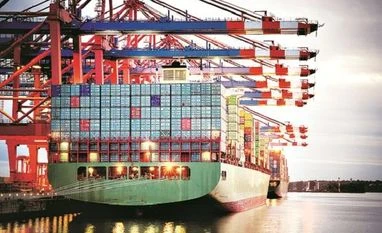 "Import, Export, trade, protectionism, Free Trade agreements, deals, FTA, Shipping, Sea ways, Sea transport, Water ways, Water transportGrowth, Economy")
premium
A case in point, animation services — an upcoming sector being promoted by the government — is conspicuous by its absence in the list of eligible services under the SEIS.
The lack of data has made difficult the commerce and industry ministry’s plans to expand the Services Exports from India Scheme (SEIS) and provide a crucial leg-up to new sectors.
Introduced in the Foreign Trade Policy (FTP) 2015-2020, the SEIS has been successful with incentives worth Rs 4,262 crore disbursed to services exporters in 2018-19 fiscal year.
“The government wants to widen the SEIS and boost support to services exporters by not only increasing reward in certain cases but also coverage of the scheme. But, getting requisite data to do so have been difficult,” said Sangeeta Godbole, director general of Services Exports Promotion Council (SEPC).
“The classification of sectors can also be improved, but we have to rely on data from industry associations to compile the size of the industry,” she said.
A case in point, animation services — an upcoming sector being promoted by the government — is conspicuous by its absence in the list of eligible services under the SEIS.
The booming sector of medical tourism is underrepresented, as only ‘hospital services’ are included in the scheme,
effectively cutting off specific services such as nursing and telemedicine from receiving government benefits.
No data
Senior officials said the lack of data had also hampered the government’s push to administer the 12 Champion Services Sectors initiative. Despite framing policy for the sector, the ministry doesn't track the size or growth of the services industry in the country. This is done by the Reserve Bank of India (RBI), which compiles services exports with the data being released after a gap of two months.
The RBI data showed services exports stood at Rs 18.24 billion in August, totaling almost Rs 90 billion in the first five months of the current fiscal year. With $57 billion worth of inbound services, imports were not far behind.
The SEIS provides duty credit scrips to exporters at the rate of 5 per cent or 7 per cent of net foreign exchange earned, that are valid for 24 months from the date of issue. The freely transferable scrips can be used to pay for customs duties on import of inputs or goods as well as excise duties.
The scheme is not expected to be revised drastically by policymakers in the upcoming new FTP, as it is also compliant with the norms of the World Trade Organization (WTO).
This is significant since the government is scrambling to alter the majority of schemes for merchandise exports, which have been deemed illegal by the WTO recently for providing undue government subsidy to traders.
Introduced in the Foreign Trade Policy (FTP) 2015-2020, the SEIS has been successful with incentives worth Rs 4,262 crore disbursed to services exporters in 2018-19 fiscal year.
“The government wants to widen the SEIS and boost support to services exporters by not only increasing reward in certain cases but also coverage of the scheme. But, getting requisite data to do so have been difficult,” said Sangeeta Godbole, director general of Services Exports Promotion Council (SEPC).
“The classification of sectors can also be improved, but we have to rely on data from industry associations to compile the size of the industry,” she said.
A case in point, animation services — an upcoming sector being promoted by the government — is conspicuous by its absence in the list of eligible services under the SEIS.
The booming sector of medical tourism is underrepresented, as only ‘hospital services’ are included in the scheme,
effectively cutting off specific services such as nursing and telemedicine from receiving government benefits.
No data
Senior officials said the lack of data had also hampered the government’s push to administer the 12 Champion Services Sectors initiative. Despite framing policy for the sector, the ministry doesn't track the size or growth of the services industry in the country. This is done by the Reserve Bank of India (RBI), which compiles services exports with the data being released after a gap of two months.
The RBI data showed services exports stood at Rs 18.24 billion in August, totaling almost Rs 90 billion in the first five months of the current fiscal year. With $57 billion worth of inbound services, imports were not far behind.
The SEIS provides duty credit scrips to exporters at the rate of 5 per cent or 7 per cent of net foreign exchange earned, that are valid for 24 months from the date of issue. The freely transferable scrips can be used to pay for customs duties on import of inputs or goods as well as excise duties.
The scheme is not expected to be revised drastically by policymakers in the upcoming new FTP, as it is also compliant with the norms of the World Trade Organization (WTO).
This is significant since the government is scrambling to alter the majority of schemes for merchandise exports, which have been deemed illegal by the WTO recently for providing undue government subsidy to traders.
Topics : Indian export Trade exports