


India yet to tackle profiteering rules as Malaysia dilutes laws
Malaysia introduced the GST in April 2015
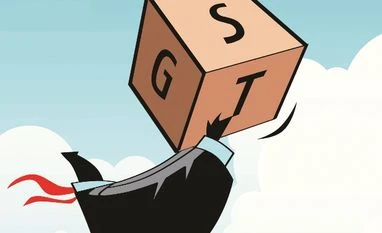 "Malaysia relaxes anti-profiteering GST rules")
premium
Last Updated : Jun 08 2017 | 12:51 AM IST
India is still working out how to check profiteering after the goods and services tax (GST) is rolled out, but Malaysia — the inspiration behind the indirect tax regime — is diluting its regulations.
Malaysia introduced the GST in April 2015. Since then it has diluted the scope of its regulations. The new anti-profiteering regulations in Malaysia, which came into effect from January this year, apply to fewer goods. Food and beverages, and household goods are still under it while the earlier law covered all.
“The rules that Malaysia introduced in 2015 to deal with the danger of profiteering were detailed, wide-ranging and difficult to apply practically. These were reworked and simpler arrangements put in place,” said Robert Tsang, GST implementation leader, Deloitte Touche Tohmatsu India.
Malaysia’s anti-profiteering rules were drawn up on a formula-based approach to determine instances of “profiteering” or “unreasonably high” profit. The prescribed formula for determination of net profit margin takes into account factors such as taxes, supplier costs, supply and demand conditions, circumstances of the geographical and product market, said Sudipta Bhattacharjee, partner, tax controversy management and contract documentation, Advaita Legal.
Tax experts are of the opinion that India’s anti-profiteering provision under the GST law is more a statement of intent that does not specify any consequence of non-compliance.
Section 171 of the Central GST Act does not spell out the grounds to test whether there has been “commensurate reduction” in price after the introduction of the GST. Similarly, it does not provide any guidance on what happens if someone profiteers. In its June 3 meeting, the GST Council decided to set up a committee to receive complaints on this. The committee comprises of revenue officers from the Centre and states.
A key lesson from Malaysia’s experience in price control after the introduction of the GST is that over-regulation and micro-management of market forces enhances cost of compliance and stifles growth, said experts. “In Malaysia, the aggressive enforcement of anti-profiteering provisions have been criticised strongly and have proved to be litigious and difficult to implement,” said Bhattacharjee.
International experience indicates that anti-profiteering provisions succeed only if there is sufficient preparation time to allow the government to monitor and collect data related to prices of various categories of products and services.
A case in point is Australia, one of the first countries to introduce robust anti-profiteering measures during introduction of the GST in July 2000. Anti-profiteering measures were implemented from 1999 and 2002.
“It is important to remember that for 12 months before the commencement of the GST, the Australian Competition and Consumer Commission rigorously devoted its resources to educate the consumers and businesses through publication of price guidelines, communication strategies and hot lines as well as extensive monitoring of prices,” said Bhattacharjee.
Tax experts hope that the anti-profiteering provisions in India are invoked sparingly and limited to cases of monopolistic and oligopolistic market conditions.
Countdown to the new tax regime
What corporate India wants:
| Assess net margin on a business vertical or group-wise basis, rather than for individual goods and services
| Assess profitability in percentage terms and not in absolute numbers
| Take into consideration impact of currency demonetisation, inflation, seasonal price fluctuations while assessing changes in net margin
Status of India's anti-profit laws
| Anti-profiteering provisions are more a statement-of-intent, does not specify any consequence of noncompliance
| Section 171 of the Central GST Act does not spell out the grounds to test any ‘commensurate reduction’ in price after introduction of GST
| Similarly, it does not provide any guidance on what happens if someone profiteers