Though this rate, experts said, is near the long-term average growth of the sector, which is 3-3.5 per cent and is much better than the gross value added (GVA) in other sectors, it comes at a time when crop production, both according to the first and second advance estimates, is expected to be at record highs.
GVA in agriculture and allied sectors in FY20 has been estimated at 4.3 per cent, while the first advance estimates had pegged growth in FY21 at 3.4 per cent.
Therefore, the latest estimate of 3 per cent is quite a drop, both from the previous year and also the first estimate.
This becomes all the more striking as growth in the crop sector, which comprises more than half the farm sector GVA, is expected at a healthy rate in FY21.
According to the second estimates, India is expected to harvest an all-time high foodgrain production of over 303 million tonnes in the FY21 crop year (July-June) due to strong kharif and rabi harvests.
Average foodgrain production in the last five years — from 2015-16 crop year to 2019-20 crop year — was 278.88 million tonnes.
Kharif production in FY21 is expected to be 147.95 million tonnes, which is around 2.9 per cent more than in 2019-20, while rabi production is estimated to be 155.40 million tonnes, which is 2.5 per cent more than the previous year.
So what is making GVA fall?
Some experts said there was little unusual in this because the growth, despite the fall, was near the long-term average of agriculture and allied sectors, while others feel while the crop sector is holding up, it is production in the allied activities that is projected to dip in the final quarter of FY21. This, in turn, is pulling down overall growth.
“My understanding is that allied sectors, particularly milk, meat, and egg production, might not do spectacularly well in the final quarter of FY21, which is why the overall sector is showing a dip in growth. Or else, how can you justify this fall when the crop sector is expected to do well,” said Madan Sabnavis, chief economist at CARE Ratings.
Sabnavis might not be wide of the mark. Some estimates say milk production in the peak flush season has been lower than last year because of multiple reasons such as lockdown in the early part of last year and the underfeeding of animals.
The flush supply months run from October to March while the lean months start after that. Animals lactate during the flush period, while milk production dips during the summer months.
According to industry assessments, India gets 500,000-520,000 litres of milk daily from farmers. It is collected by cooperative and private dairies along with individuals. This during the flush season rises to 550,000-600,000 litres daily.
But, this year despite being a peak flush season, supplies haven’t moved up much while demand has come back in a big way after the easing of the lockdown.
However, not all believe this.
Pronab Sen, programme director of IGC India Programme, said though GVA growth seen in FY21 was lower than last year, it is still near the long-term average growth.
“Between the first and second advance estimates, the crop production numbers become more firm, which is why you are seeing a divergence there,” Sen said.


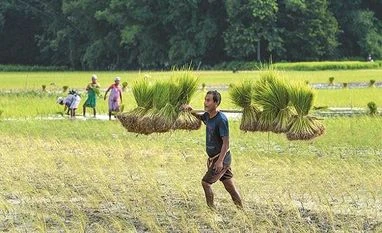 "Slow growth in allied activities drags farm sector growth, say experts")