Terror is filling the hearts of the Crusader in the land of Andalusia.
Another outlet warned that Spain was now grouped with the UK and France as terrorist targets.
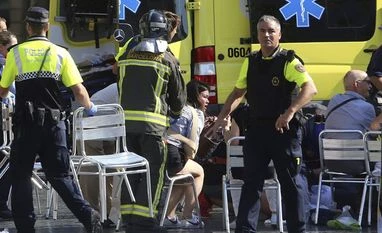
The use of vehicles in relatively vulnerable locations where crowds gather, to inflict maximum harm on innocent people, will add significantly to unease across Europe. This anxiety will now reach new levels of intensity, with German elections due on September 24, and and a Catalan independence vote on October 1.
This latest attack will cast a shadow over events that will require people to gather in crowds either to participate in political campaigning, or to vote in the election itself.
More broadly, the use of vehicles as weapons against urban populations will add to security concerns in Western capitals – including in Australia.
What’s likely to come as a result are further security measures to combat the risk of vehicular attacks in crowded locations. But we know how difficult it is to prevent such attacks.
In Melbourne, Australia, for example, authorities have installed bollards around the city to guard against these sorts of acts. But ensuring people’s safety in free and open societies represents a huge challenge.
World leaders have condemned the Barcelona attack, but beyond pro-forma statements of support the reality is that the scourge of Islamic-inspired terrorism is here to stay for the time being.
These acts of violence, each one encouraging another, are part of a terrorist landscape. They will remain so especially at a moment when IS is under enormous pressure in its stronghold in Syria.
The expulsion of IS from Raqqa in eastern Syria will not lessen threats of terrorist violence in the West. Instead, it will probably heighten the risk.
What the Barcelona attack reminds us is that the West is embroiled in a long war against Islamic terrorism. Enhanced counter-terrorism strategies, making use of sophisticated technology, will lessen risks, but cannot entirely eliminate the threat in open societies.
This is the reality.
Tony Walker, Adjunct Professor, School of Communications, La Trobe University
This article was originally published on The Conversation. Read the original article.


 "Barcelona terror attack: A long war against Islamic State is our reality")