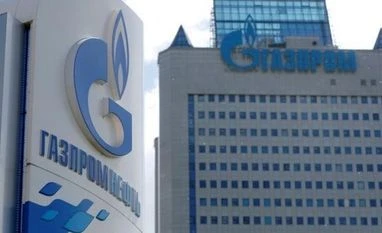
Gazprom Germania GmbH and its subsidiaries are no longer receiving all contracted volumes, German Economy Minister Robert Habeck said. Europe’s biggest economy and the largest buyer of Russian gas is receiving gas from alternative sources and can cope with the disruption, he said.
Moscow prohibited dealings with Gazprom Germania and its various subsidiaries now under the control of Germany’s energy regulator. That includes energy supplier Wingas GmbH, a European gas storage business, the London-based trading arm of Gazprom and EuRoPol Gaz, owner of the Polish section of the Yamal-Europe pipeline connecting Russia to Germany.
Germany last month temporarily took control of Gazprom Germania to safeguard security of supply.
Finland said on Thursday it would apply to join NATO "without delay", with Sweden expected to follow, as Russia's invasion of Ukraine looked set to bring about the very expansion of the Western military alliance that Vladimir Putin aimed to prevent.
The decision by the two Nordic countries to abandon the neutrality they maintained throughout the Cold War would be one of the biggest shifts in European security in decades. Moscow called Finland's announcement a direct threat to Russia, and threatened retaliation, including unspecified “military-technical” measures.
Europe gas price up 22% due to clash
European natural gas prices jumped following disruptions to a key transit route through Ukraine, and as Germany said Russia was using energy as a weapon in a clash over supply.
The benchmark contract surged more than 22 per cent, with shipments from Russia via Ukraine set to fall by about 30 per cent on Thursday following interruptions at a cross-border entry point as a result of the war. Still, German Economy Minister Robert Habeck downplayed the impact, saying the cuts amount to just 3 per cent of imports. Bloomberg
No global oil shortage, IEA says in U-turn
The world will not be left short of oil even with lower output from sanctions-hit Russia, the International Energy Agency (IEA) said on Thursday, in a U-turn after it predicted a possible “global supply shock”.
The IEA, after warning on March 16 that 3 million barrels per day (bpd) could be shut in from April, lowered that figure for a second time as it noted only 1 million bpd had gone offline. Production ramping up elsewhere and slower demand growth due to China’s lockdowns will forestall a big deficit, the Paris-based IEA said. Reuters


 "Gazprom, oil")