


CAA, NRIC and the uncertain climate
While there is no clarity as to how NRIC will be implemented or funded, the bigger question that goes a-begging is what should be India's policy towards migrants and refugees
 "Chart")
premium
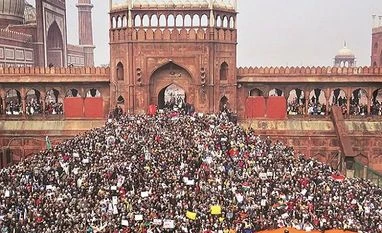
We are going through a crisis over the Citizenship Amendment Act (CAA) and the National Register of Indian Citizens (NRIC). There is a lot of confusion and one fears such confusion might degenerate into chaos, loss of lives and damage to property, besides the loss of productive time that is happening already. Broadly, three groups are protesting: The first is against inclusion of illegal migrants; the second against exclusion; and the third against discriminatory inclusion.
Protesters in Assam belong to the first group; they fear they would be saddled with over 12 million primarily Hindu refugees as citizens. The rest-of-India-protests are in two groups. One thinks that our Constitution, which espouses secularism, is now compromised because of the CAA and therefore, CAA allows discriminatory inclusion. The third group raises the more serious concern regarding the NRIC. For a country that is notorious about record keeping, this burden of proof on the residents is going to make many Indians, especially the poor, illegal. However, while a non-Muslim will have a high chance of eventually being accepted as an Indian citizen, the same is not true for Muslims without “appropriate documents”. This is the exclusion argument. However, India needs to be future ready and arguments against migrants have to be stronger than what it is currently.
Economic argument against immigration, legal or otherwise, has two parts to it: One, the argument of scarce resources, and the other, competition in the labour market. For an emerging economy where many of the "legitimate citizens" are deprived of basic welfare schemes, the scarce resources will be stretched further if more dependents are added. This was why Aadhaar was emphasised -- to prevent leakages. Dealing with refugees necessitates proper use of Aadhaar, the way it was meant to be. The labour market argument seems rather bizarre given that most of the jobs that illegal migrants manage to bag are the informal sector jobs that are not the ideal benchmark of jobs to base critical policy decisions.
The next set of arguments is based on voting rights. The accusations regarding "vote bank politics" are particularly severe when it comes to certain states that share international border with Bangladesh. How will CAA and the supposed NRIC solve this? If every person who has a valid voter card is included in the NRIC, then those who are voting now and yet should not have that right, will continue to do so. The only way to address this problem would be to perhaps draw up an entirely new citizenship criteria, not with retrospective effect but with a cut-off on the date of a relevant enactment coming into force. Then the argument of harassment of many Indians, especially the poor and the marginal, irrespective of faith, does not exist.
Protesters in Assam belong to the first group; they fear they would be saddled with over 12 million primarily Hindu refugees as citizens. The rest-of-India-protests are in two groups. One thinks that our Constitution, which espouses secularism, is now compromised because of the CAA and therefore, CAA allows discriminatory inclusion. The third group raises the more serious concern regarding the NRIC. For a country that is notorious about record keeping, this burden of proof on the residents is going to make many Indians, especially the poor, illegal. However, while a non-Muslim will have a high chance of eventually being accepted as an Indian citizen, the same is not true for Muslims without “appropriate documents”. This is the exclusion argument. However, India needs to be future ready and arguments against migrants have to be stronger than what it is currently.
Economic argument against immigration, legal or otherwise, has two parts to it: One, the argument of scarce resources, and the other, competition in the labour market. For an emerging economy where many of the "legitimate citizens" are deprived of basic welfare schemes, the scarce resources will be stretched further if more dependents are added. This was why Aadhaar was emphasised -- to prevent leakages. Dealing with refugees necessitates proper use of Aadhaar, the way it was meant to be. The labour market argument seems rather bizarre given that most of the jobs that illegal migrants manage to bag are the informal sector jobs that are not the ideal benchmark of jobs to base critical policy decisions.
The next set of arguments is based on voting rights. The accusations regarding "vote bank politics" are particularly severe when it comes to certain states that share international border with Bangladesh. How will CAA and the supposed NRIC solve this? If every person who has a valid voter card is included in the NRIC, then those who are voting now and yet should not have that right, will continue to do so. The only way to address this problem would be to perhaps draw up an entirely new citizenship criteria, not with retrospective effect but with a cut-off on the date of a relevant enactment coming into force. Then the argument of harassment of many Indians, especially the poor and the marginal, irrespective of faith, does not exist.
United Voices Broadly, three groups are protesting: The first is against inclusion of illegal migrants; the second against exclusion; and the third against discriminatory inclusion
Disclaimer: These are personal views of the writer. They do not necessarily reflect the opinion of www.business-standard.com or the Business Standard newspaper