


Diversion Ahead: 'Urban Naxal' narrative and many other red-herrings
As elections approach, the ruling party is bound to be asked inconvenient questions on demonetisation, GST, lack of job creation, sharp rise in fuel prices, and the rupee's precipitous fall
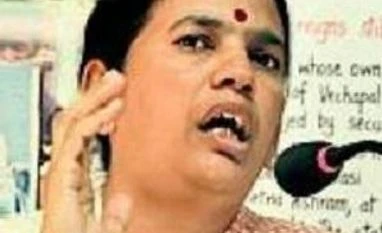 "Sudha Bharadwaj, koregaon arrests, bhima-koregaon arrests")
premium
Sudha Bharadwaj. Photo: Twitter
Last Updated : Sep 03 2018 | 7:47 AM IST
A lie has no legs but a scandal has wings – or so the old adage goes. The government knows its lie about ‘Urban Naxalites’ has no legs but the scandal surrounding the arrest of some eminent human rights activists has taken wing.
The controversy about ‘Urban Naxalites’ was quite likely, ‘war-gamed’. The institutional response of the Supreme Court and the public furore over the arrests were quite predictable. This is why it is not enough to see the arrest of six human rights activists on June 6 this year and of five others on August 28 as only an ambush on civil liberties.
Neither was it about diverting attention from the exposure of extremist Hindu outfits like the Sanatan Sanstha. Notice that the Bharatiya Janata Party (BJP) has not shown the same alacrity in absolving Sanstha activists as it did in the case of RSS activists named in the Ajmer Sharif, Mecca Masjid and Samjhauta Express terrorist attacks. If anything, it is easier for the BJP and the RSS to achieve their ideological goals legally through control over state institutions rather than through the targeted assassinations allegedly being pursued by some activists of the Sanstha.
The latest orchestration of fears about left-wing violence may, however, be just the right strategy to dig the party out of the hole it finds itself in, as elections approach.
Instead of the voters focusing on the Modi government’s failures, the new narrative will channelise the energy of the political class to less damaging avenues. Discussions on the failure of governance would be far more damaging in the public eye than a discourse on “authoritarianism”.
The promotion of the ‘Urban Naxalite’ narrative attempts to push into the background not only the controversial Rafale aircraft deal and allegations of Gujarati crony capitalism against the government but also questions about the Narendra Modi regime’s delivery on governance issues. As elections approach, questions are bound to be asked about the consequences of demonetisation, the implementation of the GST, the lack of job creation and most importantly, the sharp rise in fuel prices and the precipitous fall of the rupee.
Note how swiftly the damning report of the Reserve Bank of India on demonetisation has been defused. It conclusively demonstrated that the demonetisation exercise was futile in terms of discovering black money. It makes it difficult to justify the huge costs to the nation – the death of 105 people in the first 45 days of demonetisation, the loss of 1.5 million jobs and nearly 150 million people rendered cashless for weeks. The government also wants to avoid discussion of its own data showing a higher GDP growth at 10.8 per cent under the previous government than in its four years of rule. Nor does it want a debate on why it opposed the RBI in the Allahabad High Court for referring private power companies for defaulting on bank loans of above Rs 20 billion each to bankruptcy courts. The total bank default of 70 such power companies comes to Rs 3.6 trillion. All this while the prime minister every other day holds his predecessors responsible for the huge non-performing assets of financial institutions.
Any discussion on fixing responsibility for such gross misgovernance is being pushed aside by the heated public discussion on the “threat of left-wing extremism”.
Linking “over-ground Naxalites” to the current leadership of resurgent Dalit movements will also be useful in weaning away at least some sections of the Dalits – especially when the “Maoist infiltrators” are linked to a plot to assassinate the prime minister. The projection of a Dalit-Maoist nexus will also serve to discourage other disgruntled castes and communities from making common cause with the new and feisty leadership of the Dalit movement which has adopted an uncompromisingly anti-BJP stance.
The BJP is unable to negotiate with the new and decentralised Dalit leadership that has emerged after widespread violence against the community. Discrediting it could help push Dalit leadership back in the hands of the community’s traditional power-brokers with whom the BJP knows how to cut a deal.
The BJP also needs something for its Hindutva constituency. Its government has not been able to deliver on building the promised Ram temple in Ayodhya. Abrogation of Articles 370 and 35A to curtail the special rights of residents of Jammu and Kashmir, implementation of a Uniform Civil Code, even banning the entry of foreign Christian missionaries into India – all remain undelivered. Even on triple-talaq, only “instant” triple talaq has been held legally void. So, after being given beef-eating infidels as enemies, Hindu voters are now being offered another target of hate – Naxalites who hide among them in cities and towns, carrying not weapons but the virus of a sinister ideology.
This narrative will also help target the Congress party. Already it has been projected as a pro-Muslim party by the BJP. Now, when it takes up the defence of Dalit activists or of civil liberties, as it is bound to, it can be projected as a party that is soft on security issues and on Maoists. This will be exceptionally useful, for example in Chhattisgarh, where Congress leaders like Mahindra Karma, Nand Kumar Patel, Vidya Charan Shukla and twenty-four others have been killed by Maoists. The BJP will be able to project itself as the only protector of public safety against a party that supports godless Maoists and beef-eating minorities.
These arguments will also be useful in all those states where the BJP is in direct contest with the Congress. Those would include Gujarat, Rajasthan, Madhya Pradesh, Chhattisgarh, Maharashtra and Karnataka; and to a smaller extent Uttarakhand, Himachal Pradesh, Haryana and Delhi. Together, these states account for 192 Lok Sabha seats, of which the BJP won a staggering 170 in 2014. It would be very difficult to retain that tally.
Dubbing the Congress as pro-Maoist, besides being pro-Muslim, is one way of fixing that. There will be several other red-herrings en route to the elections. “Urban Maoism” is only the trailer. The full movie may also feature Rahul Gandhi’s Mansarovar pilgrimage through the ‘enemy territory’ of China; Robert Vadra’s land deals; benami properties of MP Congress leaders, and much more.
The writer is a journalist based in Delhi
Disclaimer: These are personal views of the writer. They do not necessarily reflect the opinion of www.business-standard.com or the Business Standard newspaper