Following the audit, the state government plans to take steps to improve the attendance of students in schools that are entitled to serve meals under the central government welfare scheme.
At present, there are around 168,000 primary and upper primary schools are covered under the scheme in UP. This means that almost 17.8 million students are eligible beneficiaries of the scheme. Apart from the schools that are partially or completely funded by the government, the scheme is operational in madrasas and special training centres as well.
The external audit and evaluation would be conducted within the next three months.
On an average, around 7.7 million students availed themselves of the scheme during the April-June period in 2017. When compared with the overall number of eligible beneficiaries, this figure is indicative of a gap that brings to light the problem of poor attendance in UP schools.
On an annual basis, the state government incurs an expenditure of over Rs 1,000 crore on the mid-day meal scheme alone. UP is among the highest-spending states in this regard along with Bihar, Maharashtra and West Bengal.
In its maiden budget presented in July 2017, the Adityanath government had made set aside a sum of Rs 254 crore for the mid-day meal scheme. Apart from this allocated sum, the UP government may pump in more money into the scheme by introducing a supplementary budget in upcoming state assembly sessions.
Close to 400,000 workers and helpers are associated with the cooking of mid-day meals in the state. Out of this total workforce, around 366,000 of them are women.
The Adityanath government is also preparing an action plan to provide domestic cooking gas connection to all such schools. Of the overall 168,000 schools, only 71 per cent have dedicated cooking gas facilities. Now, the state is taking steps to provide such connections to the remaining 29 per cent schools.
In a recent meeting with state officials, Chief Secretary Rajive Kumar had given directions in favour of conducting periodic inspections to ensure the quality of food served to children.


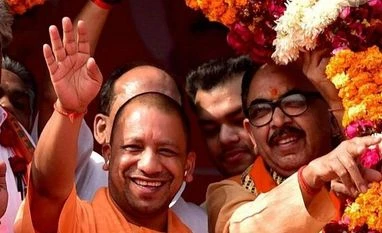 "Yogi Adityanath, Yogi, Yogi govt, Uttar Pradesh, UP govt")