


How the world once handled war crimes
Professor Gary J Bass delves into the forgotten history of the Tokyo trial after World War II, exploring the complex dynamics of justice, politics, and international law in the aftermath of conflict
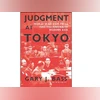 "JUDGMENT AT TOKYO: World War II on Trial and the Making of Modern Asia")
JUDGMENT AT TOKYO: World War II on Trial and the Making of Modern Asia
JUDGMENT AT TOKYO: World War II on Trial and the Making of Modern Asia
Author: Gary J Bass
Publisher: Knopf
Pages: 892
Price: $46
Also Read

By Thomas Meaney |
In our age of scorched-earth ground offensives and bombed-out hospitals, the prospect of punishing atrocities perpetrated by governments seems particularly distant. But you could be forgiven for thinking otherwise based on the recent bounty of acclaimed books that glorify the potential of international treaties and tribunals to make lasting peace.
Add to this pageant Judgment at Tokyo, by the Princeton professor of politics Gary J Bass, an elegantly written and comprehensive treatment of the prosecution of Japanese war crimes after the Second World War. As a young reporter in the 1990s, he cut his teeth covering the international tribunal that investigated war crimes committed in what was Yugoslavia. He comes from a generation of human rights partisans, forged during a high point of American power, who insist that a “rules-based” world order can be something more than a veil for Western interests.
In his new book, Professor Bass returns to another high-water mark of American dominance: The late 1940s, when the United States led the Allies in settling the terms of peace in defeated Germany and Japan. The Tokyo trial, largely forgotten in the West, involved many more of the world’s governments and left a more divisive legacy. “The Tokyo trial was a political event,”Professor Bass writes. “It was a measure of Asia’s colonial past and a prelude of its Cold War future.”
Douglas MacArthur, the general who effectively became the dictator of Japan when the post-war military occupation began, established the trial in 1946, mostly as an act of closure for Pearl Harbour. He immediately faced a dilemma. On the one hand, Washington’s allies in Asia — from the Philippines to Nationalist China — clamoured for vengeance for the Japanese brutality they had suffered in the preceding decade. On the other hand, in the early years of the emerging Cold War, the Americans had to be careful not to punish Japan too much: They needed Tokyo as an ally against Moscow.
To make matters more delicate, unlike in Germany, where the primary culprit had conveniently killed himself, in Japan the former military general and Prime Minister Hideki Tojo had put a bullet through his chest but survived, while the fingerprints of the supreme leader, Emperor Hirohito — also still alive — were all over the war effort.
The United States hoped that holding Tojo and a sliver of the Japanese military elite responsible for atrocities like the 1937 conquest of Nanking, during which Japanese soldiers slaughtered and raped tens of thousands of Chinese civilians, would dampen grievances in the region while lifting Emperor Hirohito high enough above the fray that he could help his subjects acquiesce to a version of liberal capitalism that America could live with. But several Allied judges, including the Chinese jurist Mei Ruao, wanted to take down the emperor, whom they saw as equally guilty for Japanese militarism.
Though Professor Bass’s book does not stint on historical analysis, it is written with the panache of a journalist who knows how to pace a scene. The most dramatic passages in Judgment at Tokyo focus on Radhabinod Pal, the Indian judge who argued that the rise of Japanese militarism was a justified response to centuries of Western racism and colonialism in Asia. “Only a lost war is a crime,” Pal pithily wrote in his 1,000-page dissent. Professor Bass quotes Gen Curtis LeMay, the architect of aerial destruction in 67 Japanese cities. He would have been tried as a war criminal if Japan had won the war, LeMay later said: “Fortunately, we were on the winning side.”
Tojo and his fellow military commanders had always been ready to take the fall for the emperor. In 1948, two years after the trial began, the condemned presented haikus and were hanged. The emperor himself was spared, and Japan, according to plan, became a single-party democracy and a stalwart ally of the United States.
But, as Professor Bass emphasises, that is only half the story. There were fires beneath the surface that the American occupation was never able to put out. Judge Pal became a hero not only in India, but in Japan as well; an imposing memorial for Pal stands near a shrine in Tokyo that is dedicated to the Japanese war dead.
Professor Bass laments how far international law still has to go before it becomes a truly universal set of legal norms. That the recent bombings and expulsions of Gazans, Armenians and Ukrainians will be resolved through appeals to international justice rather than through negotiated settlements seems an unlikely proposition. “Throughout the Tokyo trial,” Professor Bass notes, “the Allies repeatedly asserted that these new principles of international law would apply to themselves as well.” But, as the author also writes, no high-up American has ever been tried for the country’s atrocity-ridden wars and interventions in Vietnam, Cambodia, Iraq and Afghanistan. In 2002, Congress passed the so-called “Hague Invasion Act,” which authorised the use of military force to liberate any American service member detained by the International Criminal Court.
It’s a testament to the civilising appeal of international law that someone with as fine a set of antennae as Professor Bass can examine it so closely without fully addressing the paradoxical nature of the US-led order. To claim that “humanity” is on your side makes it trickier to make peace with enemies who stubbornly share the human form. Boosters of international law are advised to stake claims on future book titles before they’re taken: Judgment at Moscow, Judgment at Tehran, Judgment at Beijing.
The reviewer is the editor of Granta.© 2023 The New York Times News Service
Topics : BOOK REVIEW Japan War crimes suspect World War 2
Don't miss the most important news and views of the day. Get them on our Telegram channel
First Published: Oct 22 2023 | 9:13 PM IST