


Jeffrey Toobin's book explores the dubious history of presidential pardons
In some ways, Toobin's book is impeccably timed. In December, President Joe Biden pardoned his son Hunter despite previous pledges not to
 "book")
Listen to This Article
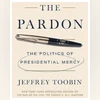
THE PARDON: The Politics of Presidential Mercy
Author: Jeffrey Toobin
Publisher: Simon & Schuster
Pages: 287
Price: $29.99
Also Read

 "Karma's Child")
 "book")
 "book")
 "The Green Book: An Observer's Notebook")
 "book")
In some ways, Toobin’s book is impeccably timed. In December, President Joe Biden pardoned his son Hunter despite previous pledges not to. In his final minutes in office, Biden went on to pardon five other members of his family. Trump, upon taking office later that day, pardoned or commuted the sentences of the more than 1,500 of his supporters who rioted at the Capitol on January 6, 2021. Toobin completed this book before Trump started his second term, but in an epilogue he presciently predicted that Trump would issue a “blanket pardon” to all of the January 6 defendants: “When he pardons them, Trump will, in effect, pardon himself.”
Toobin explains that “presidential powers of clemency” have their “roots in the royal prerogative of mercy” — a strangely monarchical vestige for a democracy that had rebelled against the king. Still, early proponents of the pardon power insisted that it ultimately benefited the people. Alexander Hamilton called the pardon “the benign prerogative” that would soften the harsh penalties of criminal law. “Without an easy access to exceptions in favor of unfortunate guilt,” Hamilton explained, “justice would wear a countenance too sanguinary and cruel.”
From such lofty beginnings has flowed plenty of trouble. The fact that there is “no check or balance” on the power of the pardon has invited “chaos in the executive branch,” Toobin writes. As much as presidents like to cast pardons as unequivocal gestures of mercy, he maintains that they are better under–stood as political acts. Abraham Lincoln offered amnesty to ordinary Southerners in exchange for oaths of loyalty to the Union because he wanted to hold the country together; Andrew Johnson granted pardons to the leaders of the Confederacy without seeming to care about the potential for such impunity to tear the country apart. “Pardons are manifestations of the presidential id,” Toobin writes.
Most of his book is given over to recounting what was — at least until recently — “the most controversial presidential pardon in American history”: Gerald Ford’s pardon of Richard Nixon. On August 9, 1974, Nixon resigned from the presidency after the House Judiciary Committee recommended that he be impeached for obstruction of justice in the Watergate scandal. A month later, President Ford, who had assumed office after serving as Nixon’s vice president, announced that he was granting “a full, free and absolute pardon unto Richard Nixon,” because the former president “and his loved ones have suffered enough.”
Toobin offers a granular narrative of all the secretive machinations that led to that day. Nixon knew that he couldn’t be the one to float the idea of a pardon to Ford. Such an agreement would have been unseemly, making it look as if Ford was getting the presidency in exchange for a pardon. But as Toobin makes clear, Nixon was the consummate schemer; Ford was both blessed and cursed by his “placid temperament and manifest decency.”
Before Nixon’s resignation, Ford had made a point of never asking him about Watergate; afterward, Ford continued not to talk about it. He delivered his most famous line shortly after being sworn into office: “My fellow Americans, our long national nightmare is over.” The line resonated powerfully with the public, but Ford, being Ford, fretted that the line was too mean to Nixon.
Toobin traces the steps of this convoluted dance. Nixon wanted a pardon and pretended he didn’t; Ford wanted to grant the pardon and had a hard time hiding that fact. Through intermediaries, Nixon used his papers and tape recordings as leverage, maintaining that they belonged to him and not, as Ford insisted, to the government. Toobin calls Nixon’s gambit “a form of extortion.” (Until the Presidential Records Act of 1978, a president’s papers were treated as his private property.)
By pardoning Nixon, Ford also thought he could “spare the country” and move past the ugliness of Watergate. Toobin calls it a “bad pardon for an honorable reason”; it helped stoke the very cynicism it was supposed to quell.
What struck me most about The Pardon was how bizarrely quaint all the wrangling over Watergate seems now, compared with the onslaught of our frenzied political moment. Take the notorious events of October 20, 1973, known as the Saturday Night Massacre, when Nixon ordered his attorney general to fire Archibald Cox, the special prosecutor for the Watergate investigation. The attorney general refused and resigned; then the deputy attorney general refused and resigned.
In 1973, Nixon’s abuse of power was outrageous, but the immediate victims of the Saturday Night Massacre could be counted on one hand. Contrast this with what has happened in the last three weeks; the Trump administration has been firing people at such a breakneck clip that a bewildered public can barely keep up. Trump isn’t known for his consistency, but he has shown a consistent fascination with making bids for unchecked presidential power.
Toobin’s book offers little by way of consolation. Even in a democracy, “the royal prerogative of mercy” has its appeal, especially during cruel times. But as The Pardon makes exceedingly clear, it can also serve as a weapon for a leader who insists he can do whatever he wants.
The reviewer is non-fiction book critic for The Times
©2025 The New York Times News Service
More From This Section
 "book")
 "book")
 "Book")
 "Bill Gates")
 "Becoming Bangalore: Stories that Shaped a Hometown")
Topics : BOOK REVIEW Book
Don't miss the most important news and views of the day. Get them on our Telegram channel
First Published: Feb 16 2025 | 11:53 PM IST