


Amitava Kumar's The Green Book: A professor's ways of seeing the world
People who aspire to write their own book someday might want to take a cue from Dr Kumar's writerly routine
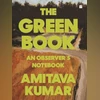 "The Green Book: An Observer's Notebook")
The Green Book: An Observer's Notebook
Listen to This Article
The Green Book: An Observer's Notebook
Author: Amitava Kumar
Publisher: HarperCollins
Pages: 254
Price: ₹799
Also Read

 "book")
 "book")
 "Becoming Bangalore: Stories that Shaped a Hometown")
 "BOOK")
 "book")
“Attention paid by the artist saves objects (and arguably, people) from the world’s indifference. That is perhaps the point of noticing, of observing,” writes Amitava Kumar, a professor of English at Vassar College in upstate New York, in The Green Book: An Observer’s Notebook. The book was written while he was a Cullman Center Fellow at the New York Public Library during the academic year 2023-24.
It is a work of non-fiction that cannot be classified neatly as a memoir, travelogue or journal because the author seems more interested in playing with ideas and forms than sticking to a genre or delivering what agents and publishers can define, package and market easily. Apart from text, the book also includes drawings, watercolour paintings, photographs and collages.
Dr Kumar draws the reader’s attention to gulmohar, sheesham, banyan, semul and tamarind trees. Besides words, he relies on colours, textures, light and shade to heighten the reader’s appreciation of little details that are easy to miss in an age where human powers of quiet and careful observation are dulled by endless scrolling.
His objective here is not to present trees “as a motif of romance or mere nostalgia” but to “face the crisis of the anthropocene where the dominance of the human, his arrogance as much as his greed, has brought the planet to the brink of annihilation”. He also leaves us with a shocking piece of information. “I have read somewhere that 1,200 square kilometres of forest are cut down each year in India just to burn bodies,” he notes.
Dr Kumar’s approach to the ecological crisis appears to come from a place of love, which manifests as grief because he takes personal responsibility for the harm that human beings have caused. “Why does construction look so much like destruction?” he asks, while writing about hydroelectric power plants and landslides in ecologically sensitive mountainous terrain.
This grief is interlaced with other kinds of grief documented in the book: The grief that follows the death of the author's parents who lived in India, the grief that arises from acknowledging that the “pluralist ethos” of the nation is “in tatters”, and the grief of bearing witness to the dead bodies of children in Gaza killed by Israeli airstrikes and ground operations funded by the United States while much of the international community chose complicity over solidarity and a call for accountability.
This book is a collection of jottings and musings that flow from the author's mind in response not only to the buzz of life that he experiences and observes in New York, Varanasi, Patna, Rishikesh, Auli, Devprayag, Joshimath, Prayagraj and Delhi but also to what he reads on these journeys. This includes a wide range of writers such as Rabindranath Tagore, Nirmal Verma, Salman Rushdie, Jhumpa Lahiri, Shiva Naipaul, Kobayashi Issa, Zadie Smith, G N Saibaba, James Baldwin, Oscar Wilde, Virginia Woolf, and George Orwell.
People who aspire to write their own book someday might want to take a cue from Dr Kumar’s writerly routine. He shares, “I’m committed to writing every day. I'm also an advocate of walking every day. The mantra I offer my students is that each day they write 150 words and walk mindfully for at least ten minutes.” Going by this modest ask, setting up a disciplined writing practice does not seem all that challenging.
While many dream of writing a book, it is hard to generate material. Dr Kumar recalls, for instance, that author V S Naipaul “suffered from the fear that he had run out of fictional material after having written A House for Mr. Biswas. Similarly, Dr Kumar himself wondered who would publish this experimental book of his. This is a genuine concern in today's publishing market where commissioning editors are often constrained by the demands of sales and marketing teams. They are reluctant to take risks, and settle for the formulaic.
Fortunately, Dr Kumar did not give up. He was standing, after all, on the shoulders of writers like Henry David Thoreau, Annie Proulx, the Bronte sisters, Vladimir Nabokov, and Jack Kerouac whose “mixed genre creations” greeted him at the New York Public Library. In following their example, he has created a thing of great beauty that will give hope to those who are struggling with a writer’s block and to those who are open to a work of literature that may seem like a heap of fragments but is held together by its own inner logic.
The reviewer is a journalist, educator, and literary critic
More From This Section
 "book")
 "Book")
 "Bill Gates")
 "Book Fair")
 "Book")
Topics : BOOK REVIEW books Book reading
Don't miss the most important news and views of the day. Get them on our Telegram channel
First Published: Feb 11 2025 | 10:47 PM IST