


Vasili Mitrokhin, the lowly clerk who tried to bring down the mighty KGB
Vasili Mitrokhin's lonely defiance inside the KGB reveals how a rotting security state hastened the Soviet collapse - and how its ghosts still haunt Russia today
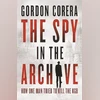 "THE SPY IN THE ARCHIVE: How One Man Tried to Kill the KGB")
THE SPY IN THE ARCHIVE: How One Man Tried to Kill the KGB
Listen to This Article
THE SPY IN THE ARCHIVE: How One Man Tried to Kill the KGB
By Gordon Corera
Published by Pegasus
326 pages $29.95
Alexander Nazaryan
Vasili Mitrokhin was a Russian who hated what Russia had become. “The country seemed to be turning into a cynical, corrupt and uncaring place,” the British author Gordon Corera writes in his unexpectedly enthralling biography of Mitrokhin, The Spy in the Archive.
Also Read

 "Trading")
 "drones, millitary, army")
 "Nato countries")
 "The Outsider: A Memoir For Misfits by Vir Das | Published by Harper Collins - 255 pages, ₹699")
 "navy drill")
By the early 1990s, decades of deception enforced by state terror had left Russia, and the rest of the Soviet Union, in a state of paranoia. War in Afghanistan devastated an entire generation of young men. The nuclear accident at Chernobyl made clear that the “leaders” in the Kremlin were, in fact, uncaring incompetents.
The myriad shortcomings of the Soviet experiment are not exactly news. What makes Corera’s book original is that he shows the USSR’s demise from the vantage point of its security services. We see how the Kremlin’s obsession with national security degrades civil society. “Fear was the sinister energy that animated the rotting, hulking corpse of the Soviet Union,” as Corera puts it.
The KGB had its roots in the Cheka, one of those classic Soviet acronyms, which stands for “Extraordinary Commission.” Founded by the ruthless Feliks Dzerzhinsky, it and its progeny (the NKVD, then the KGB) became the most important institution in the Soviet Union. “Chekism,” as it was known, became the national culture. Citizens were routinely urged to report anyone they suspected of disloyalty. Artists and writers who refused to mouth platitudes were silenced in the name of patriotism.
Mitrokhin had joined the KGB after World War II, but fared poorly in postings to Australia and Israel. Upon returning to Moscow, he was tasked with ministering to the archives of the KGB’s First Chief Directorate, which ran spies abroad. Mitrokhin spent years copying these secret files, at great personal risk. He then handed his shadow archive, which he had stashed in milk jugs, to British intelligence agents in Latvia (the CIA, in its infinite wisdom, had passed). They whisked him, and his secrets, out of Russia in 1992.
By the time The Sword and the Shield: The Mitrokhin Archive and the Secret History of the KGB was published in 1999 (shaped into a coherent narrative by the British intelligence expert Christopher Andrew), the Soviet Union was eight years gone. The KGB had rebranded as the FSB. Three months after the book came out, Moscow and other Russian cities convulsed with deadly apartment bombings many believe were engineered by the FSB in order to launch a second (disastrous) war in Chechnya. The bombings also helped bolster support for a former KGB officer named Vladimir Putin.
To put it bluntly, Mitrokhin’s archive did not force the reckoning he’d sought. A few people were arrested in the United States and Europe, but by the time Mitrokhin died in 2004, Russia’s imperial swagger was back, this time burnished by the sheen of global capitalism. Corera wisely does not focus on the archive’s contents, now housed at Cambridge. Instead, he tries to understand how this figure, who seemed so “unimpressive and uninteresting” to his British handlers, could come to believe that he could single-handedly take down an organisation that could have easily had him exiled or executed.
The answer lies in Mitrokhin’s growing disgust with Moscow’s rulers, whose vast security state functioned only to perpetuate their own power and wealth. His disenchantment did not turn into apathy, as it so often does in the face of sheer power. Instead, it sharpened into ferocious defiance. He was born in Yurasovo, a village in central Russia. “Long after he left and until his dying days, he would still be restlessly searching for those snow-covered forests of his youth,” Corera writes.
Especially poignant are the chapters dealing with Mitrokhin’s dozen years in the West. They were not a happy time. His son was disabled, and there had always been distance from his wife. Worse than his personal grief, however, was his grief over what Russia was becoming in the post-Communist years.
“Capitalism seemed savage and arrogant new leaders seemed stubbornly unwilling to admit the pain it was causing,” Corera writes of the go-go 1990s, when the Kremlin gave away entire industries to its friends (the future oligarchs). The well-off in Moscow and St Petersburg descended into crass hedonism, while the vast legions of Russia’s poor continued to suffer.
A defense minister goaded an increasingly enfeebled President Boris Yeltsin into the debacle that was the first Chechen War. The Russian Orthodox Church turned into a conservative cultural enforcer and a Kremlin tool. Nationalist thugs roamed the streets, harassing ethnic minorities and Jews.
So, yes, in one very real sense, Mitrokhin failed. But if his own story is tragic, Russia’s is much worse. The greatness Putin claims to have restored rests on the fundaments of kleptocracy, aggression and disregard for human rights.
In 1983, when Mitrokhin was in the midst of his treacherous transcription project, nuclear fears spiked because of a Nato nuclear exercise, known as Able Archer, that the Soviets interpreted as a genuine provocation. Eventually defused, the incident and related geopolitical tensions nevertheless allowed Moscow to return, however briefly, to the self-righteous bluster of an earlier day. It was a last gasp of a political movement that had always been too comfortable with its own delusions. The empire would collapse in eight years.
©2026 The New York Times News Service
More From This Section
 "At the Edge of Empire: A Family's Reckoning with China")
 "The Great Revival")
 "Surviving Climate Anxiety")
 "If Anyone Builds It, Everyone Dies")
 "AMERICAN REICH: A Murder in Orange County, Neo-Nazis, and a New Age of Hate")
Don't miss the most important news and views of the day. Get them on our Telegram channel
First Published: Jan 11 2026 | 10:27 PM IST