


The Edge of the Empire: Edward Wong's book on journeys in Chinese imperium
The personal story of a father and son provides insights into Chinese society, politics, and geopolitics, showing how the impulse to control and expand the Chinese empire is stronger than ever today
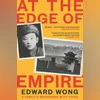 "At the Edge of Empire: A Family's Reckoning with China")
premium
At the Edge of Empire: A Family’s Reckoning with China
5 min read Last Updated : Jan 08 2026 | 10:12 PM IST


Listen to This Article
At the Edge of Empire: A Family’s Reckoning with China
By Edward Wong
Published by Profile Books
461 pages ₹699
In The Edge of the Empire: A Family’s Reckoning with China Edward Wong, journalist with The New York Times, writes about his and his father’s journeys in and away from China and how they shaped their understanding of the country as well as of each other. “We made separate journeys, but his came to inform mine. I write here of them. Or rather, I write how we have each remembered moments in those journeys,” he explains at the start.
The book does more than navigate their personal journeys; it also documents China’s journey since the Sino-Japanese War till the end of the Covid-19 lockdowns. It is an insightful attempt to juxtapose the personal lives of Chinese people and the political system, providing an invaluable window on how the policies and programmes implemented by the Chinese Communist Party (CCP) have impacted China’s citizens.
One of the fundamental observations Wong makes is that Mao Zedong remains the central figure in Chinese politics even today. One cannot ignore the fact that Mao’s “… presence had consumed China … and his shadow still fell over so many aspects of politics and society in the country,” he says.
For Wong, the personal and political have been strongly tangled in China. This has been expressed through a conversation between his father and his friends. The author writes, “They referenced the significant events of the last century, the movements and politics and personalities that had shaped the nation, parsing their own lives against the backdrop of epochal transformations.”
The CCP’s inherent suspicion towards its own people had a strong impact on the fortunes of the Wong family. The fact that a family member was studying in the United States became an impediment in Wong’s father’s attempt to gain the trust of the party and his desire for party membership. His dedication and commitment paled before his family’s history. As the author concludes, “Father realised that the party’s leaders had developed their own system of levying judgement. This was a new ordering, a new form of social control, a new way of distributing power. But at its heart, it had elements of the old feudal hierarchy. A person couldn’t transcend their past and their family history”. This fact holds true even today.
Another aspect of the CCP that the author dwells on is the inherent insecurities of the party. One of the prominent challenges that China faced under Mao was “the conspiratorial thinking, the poisonous mentality that led to a hunt for enemies everywhere, was rooted in the nature of the party, in its secretive, Leninist structure that had been set up to carry out a revolution. But a fundamental part of the problem lay in the concentration of power in a single man.” That observation resonates even today. Under Xi Jinping, the abolition of the term limit, the anti-corruption storm that has engulfed the political and business system highlights the challenges which come with autocratic governments. The author asserts, “Years later, after witnessing Xi Jinping’s rule, I understood the nationalism he was fuelling was a continuation of the direction that the party leaders had been taking China since the 1990s rather than a new phenomenon. The paradigm had been built over decades, and not by one man”.
The book is an interesting addition to the existing literature on Chinese society, politics and geopolitics. Though written in the form of a personal story, it evocatively portrays the developments in the People’s Republic of China (PRC) under the CCP. It is easy to read and simple to comprehend. It provides perspectives on a wide range of issues and deftly weaves the social and political in China, driving home the argument that under CCP and Xi Jinping the primary driver is full commitment to the party and its rules. Today the party dictates every aspect of the Chinese society, media, culture and continues to decide what being Chinese means.
The title of the book is an interesting reference to the fact that the CCP and its policies have not wavered much from the Qing empire and how the primary driver is to control the empire/nation. The author writes that the Qing had, “…. built a new type of empire from their Qing court in Beijing, one more sprawling than any assembled by a Chinese ruler. The Nationalists and the Communists became their heirs”. He adds, “The Communist would model many of their strategies of control in Xinjiang after those of the late Qing imperium. And all the major ethnic and territorial issues they would grapple with — Xinjiang, Tibet, Hong Kong, and Taiwan — have roots in the Qing era”. Today the desire to control and expand this “empire” is stronger than ever within the CCP and Xi Jinping, and is projected through the slogan of “rejuvenation of the Chinese nation”.
The reviewer is associate professor, O P Jindal Global University
Topics : China Xi Jinping COVID-19 BOOK REVIEW Book reading BS Reads