


Focus capital goods industry to gain a long-term manufacturing advantage
The Budget should present a clear strategy to revive the Indian economy and make the country a successful manufacturing base in the world
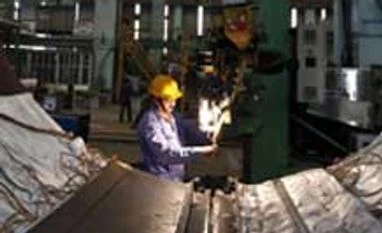)
The stable Government led by PM Narendra Modi has come at the right time when the entire world is looking at India as a potential growth market. The forthcoming Union Budget should be used as a vehicle to signal the government's commitment to bring confidence back in the economy and revive growth by addressing the challenges faced.
Challenges faced by the manufacturing sector
Availability of power has been one of the key challenges the industry is struggling with. Though the power industry has been trying to cope up, the demand and supply gap is still not met. This will become one of the key constraints for growth.
The next challenge is the lack of connectivity within many parts of India which is posing difficulties to transport goods across the country either through road or rail. Facilities in ports are also inadequate, leading to clearance turnaround times going up to 4-5 days as against 10 to 12 hours in an international port, leading to blocking of working capital. Non-availability of railway wagons has also been affecting the industries, in spite of rail being the cheaper mode of transport in many instances. Hence logistics costs have been one of the high spend areas in many sectors affecting bottomline.
There has been a long wait for the GST in the absence of which industries face the varying tax structures in centre and state.
If one looks at specific issues in the sector, the auto sector players have been struggling with increase in raw material prices in a market where demand is going down. The higher custom duties on some of the raw material inputs such as alloy steel, mild steel, and aluminum alloy had put further pressures.
In the cement sector, while the import of cement into India is freely allowed, all the major inputs for manufacturing cement such as limestone, gypsum, pet coke, packing bags, etc attract customs duty. In this situation, duty free imports cause further hardships to the Indian cement industry.
The chemical sector is dependent on imports for intermediates required for pesticides, pharmaceuticals, dyes, etc. While there are efforts taken to create domestic capacities, import duties on feedstock such as toluene, xylene, industrial alcohol, naphthalene etc need to be reduced.
In the petrochemical sector, the business environment is challenging due to factors like low level of import duty on products, substantial export-oriented capacity build-up in India's neighborhood and proliferation of FTAs. While the duty on petrochemical products are very low in India, import duty on key feedstock is one of the highest thereby making the duty spread between products and inputs for petrochemicals one of the lowest in the world. This has substantially impacted the competitive position of Indian manufacturers as compared to their counterparts in other countries.
KPMG India’s S Sathish
Focus should also be on promoting capital goods manufacturing industry to gain a long term sustainable manufacturing advantage. Many of these issues have to be addressed in the budget for revival in manufacturing sector.
Hence the key themes for the budget are:
- Infrastructure development should be one of the key themes in the budget. The spend on infrastructure should be significantly increased for construction of roads to improve connectivity and world class ports. There should be measures and incentives to facilitate infrastructure financing by private sectors. Measures for increasing the availability of wagons and promoting rail transportation should be a focus area
- Bridging the power deficit: New power projects, reforms for faster clearances of projects should find its place in the budget
- Implementing GST: The Government should bring in the long awaited GST and ensure its faster implementation
- Rationalising duty structures in basic industries to revive economy: By eliminating/minimising import duty on key input materials such as steel and aluminum alloys for auto or pet coke for cement or feedstock for chemical sectors (building blocks such as toluene, xylene, industrial alcohol etc), the government can give a boost to these sectors. Reduction in excise duty cut on vehicles/capital goods can bring the auto sector/capital goods sector back from the downturn. By increasing the customs duty levied on imports of finished products such as cement, petrochemicals, etc will help in protecting the Indian industry.
- Skill development: The list will not be complete without including promotion of skill development activities within the industry. There should be Industry-Government promoted skill development programs and this budget should provide incentives for industries who take up those skill development efforts.
-
Increasing disposable income: Reforms to be brought in to increase the disposable income through structural changes in DTC to promote demand across industries
________________________________________________________________________________________________
S Sathish is the Partner – Management Consulting, KPMG in India

Don't miss the most important news and views of the day. Get them on our Telegram channel
First Published: Jul 02 2014 | 10:16 AM IST