


ADB flags India's oil vulnerability amid rising West Asia tensions
ADB says India's crude oil reserves of about 100 million barrels-enough for 40-45 days-leave the country exposed to potential supply disruptions through the Strait of Hormuz
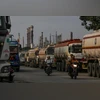 "Oil, Oil tankers, Oil tanker trucks")
Moody’s on Friday also said the Middle East conflict poses a substantial risk to the global economy, including India, if it causes a prolonged dislocation in energy markets, with the Strait of Hormuz being a critical choke point. | Image: Bloomberg
Listen to This Article
Asian Development Bank (ADB) on Friday warned that India’s limited crude oil reserves of about 100 million barrels — sufficient for only 40–45 days of consumption — leave the country particularly vulnerable to supply disruptions through the Strait of Hormuz amid the ongoing war in West Asia.
“In Asia, reserve adequacy varies widely among major importers. Japan and the Republic of Korea, both International Energy Agency (IEA) members, meet the 90-day stock requirement and can join coordinated emergency releases. PRC (People’s Republic of China) and India, outside the IEA system, rely on their own stockpiles. PRC’s roughly 401 million barrels provide 3-4 months of cover, while India’s 100 million barrels give only 40-45 days, leaving it especially vulnerable to disruptions in the Strait of Hormuz,” ADB Chief Economist Albert Park said in a series of posts on X.
Moody’s also said the West Asia conflict poses a substantial risk to the global economy, including India, if it causes a prolonged dislocation in energy markets, with the Strait of Hormuz being a critical choke point.
“India stands out among large Asian economies that rely on West Asia crude. Costly energy imports would weaken the rupee, raise inflation, worsen the current account balance, and complicate monetary policy as well as fiscal management if they lead to expanded subsidies to help offset the economic shock,” it added.
In a report, QuantEco Research said that given India’s limited trade integration with Iran and Israel -- with both countries having a cumulative share of just 0.4 per cent in India’s total merchandise trade -- the country will avoid any major direct macro fallout from the ongoing war.
Also Read

 "Illustration: Binay Sinha")
 "Piyush Goyal, Piyush")
 "Iran warship")
 "oil, barrel, oil barrel")
“However, Iran’s control of the Strait of Hormuz, a key maritime chokepoint that witnesses 20 per cent of global energy shipments, has sent crude oil prices to their highest level in 21 months. The durability of this price shock is bound to create adverse spillovers. According to the Reserve Bank of India (RBI), a 10 per cent increase in crude oil prices could result in a 30-basis-point upside to CPI inflation while providing a 15-basis-point downside to gross domestic product (GDP) growth.”
It said the impact would be extremely muted as long as oil prices average under $80 per barrel in FY27. However, movement of crude oil prices towards $90 per barrel could create asymmetric impacts, with the balance of payments (BoP) reflecting the primary fallout, followed by inflation, growth, and fiscal policy.
“Under this scenario, we project India’s GDP growth and CPI inflation at 6.5 per cent and 4.5 per cent respectively, accompanied by a BoP deficit of $30 billion. This adverse macro combination could result in the rupee weakening towards 97, while the 10-year sovereign yield could touch the 7 per cent mark,” it added.
ADB’s Park said the duration and magnitude of oil and gas price spikes will depend on several factors, including how quickly output at affected facilities can be restored, whether disruptions remain contained or spread to other production or processing installations in the region, and the extent to which alternative suppliers can ramp up output or redirect shipments.
“Market dynamics will also hinge on inventory buffers in key importing regions, the availability of spare capacity, and the perceived risk of further escalation. If disruptions prove temporary, price pressures could ease relatively quickly. If they broaden or persist, elevated volatility and sustained price increases would be more likely,” he added.
What agencies said
ADB says while China’s roughly 401 million barrels provide 3-4 months of cover, India’s 100 million barrels give only 40-45 days
According to Moody’s, a prolonged energy market shock could weaken the rupee, raise inflation, worsen the current account, and complicate policy management in India
QuantEco Research says direct trade exposure to Iran and Israel is minimal (0.4 per cent of trade), limiting immediate macro impact.
More From This Section
 "Siddaramaiah")
 "Moody's")
 "Russian oil, India, crude oil")
 "sugar")
 "Pushkar Singh Dhami, Uttarakhand CM")
Topics : crude oil reserves India economy energy sector Crude Oil Price West Asia Israel Iran Conflict Asian Development Bank
Don't miss the most important news and views of the day. Get them on our Telegram channel
First Published: Mar 06 2026 | 5:49 PM IST