


Aluminium industry needs policy support for next phase of growth: Hindalco
Hindalco and Vedanta executives said policy support, innovation and investment will be critical as India's aluminium demand is set to multiply, driven by urbanisation and industry needs
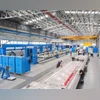 "Hindalco brings in Italian company Metra to manufacture high-precision extruded products for high-speed aluminium rail coaches in India")
With consumption expected to climb steeply, executives stressed that government policy, industry innovation and sustained investment will be key to positioning aluminium as the “metal of the future” for India’s growth. (Source: Hindalco Industries Ltd)
Listen to This Article
The domestic aluminium industry needs multiple policy measures to enter the next phase of growth, even as consumption is set to multiply in the coming decades, a senior executive of Hindalco Industries said on Wednesday.
“Policy support in areas such as production-linked incentives, rationalisation of import duties on imported machinery and compliance with Indian quality standards will go a long way in propelling this industry to the next level of growth,” said Aniruddha Kulkarni, chief strategy officer of Hindalco Industries Ltd, at an industry event.
To remain globally competitive, Kulkarni highlighted three priorities for the industry: improving product quality through access to better dies, embracing circularity and recycling, and adopting digitalisation to cut costs and foster innovation.
He referred to the government’s aluminium vision document, which projects that consumption will double from 5 million tonnes to 10 million tonnes in the next five years. “The extrusion industry can be a big beneficiary of that if we come together,” he said.
Kulkarni pointed out that India’s per capita aluminium consumption stands at only 3.5 kilograms, compared to the global average of 12 kilograms. He said demand will be fuelled by rapid urbanisation, industrial growth, infrastructure spending and sustainability drivers such as solar energy and electric vehicles.
Also Read

 "The steel ministry has urged the Ministry of Finance to double the basic Customs duty on imported finished steel products to 15 per cent from the current 7.5 per cent in the upcoming Union Budget for 2025–26, people aware of the matter said.")
 "Nalco rides on London Metal Exchange gains, sees room for more price hikes")
 "Anil Agarwal, Vedanta chairman")
 "Vedanta")
 "Vedanta")
Speaking at the same event, Rajiv Kumar, chief executive officer of Vedanta Aluminium, said the sector’s importance extends well beyond industry. “Aluminium is vital for India’s energy independence, net zero ambitions and global competitiveness,” he said. He added that the sector contributes 2 per cent of India’s GDP but has scope to expand sharply as domestic demand is expected to rise six-fold from 5 million tonnes to 28 million tonnes by 2047.
Kumar said Vedanta is investing heavily to meet this surge. The company plans a 3-million-tonne greenfield aluminium smelter in Dhenkanal, Odisha, which will raise its overall capacity to 6 million tonnes. “This greenfield aluminium smelter has the potential to create over 2 lakh jobs and provide a major economic thrust to the region,” Kumar said.
Vedanta is also doubling its billet capacity from 580 kilotonnes to 1.25 million tonnes and aims for over 90 per cent of output to be value-added products serving sectors such as automotive, renewables, aerospace and consumer goods.
With consumption expected to climb steeply, executives stressed that government policy, industry innovation and sustained investment will be key to positioning aluminium as the “metal of the future” for India’s growth.
More From This Section
 "V Anantha Nageswaran, Nageswaran, Anantha")
 "trade, import, export, container, shipping")
 "Eicher Motors, Royal Enfield")
 "rare earth magnet, magnet")
Don't miss the most important news and views of the day. Get them on our Telegram channel
First Published: Sep 10 2025 | 5:25 PM IST