


India's top metros double urban footprint in 30 yrs; Pune, Bengaluru lead
A new report shows India's biggest cities have grown fast in 30 years, with Pune and Bengaluru leading the way as they add new homes, offices, roads and become key growth centres
 "High-rise building")
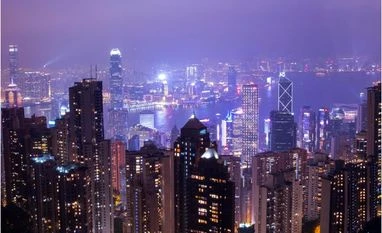
By 2050, over 53 per cent of Indians — nearly 876 million people — will live in cities. (Photo/Pexels)


Listen to This Article
India’s top eight cities have more than doubled their urban footprint in the last three decades, transforming into sprawling economic hubs that are driving the country’s growth story, according to a new report by Square Yards titled “Cities in Motion – Tracing 30 Years of Urban Expansion".
The study used satellite images from 1995 to 2025 to track how cities have grown. Data from Landsat and the Global Human Settlement Layer (GHSL) helped identify areas with buildings and separate them from open land, farms or water bodies. The research focused on the real spread of cities, including surrounding urban areas, instead of just official city limits.
Pune, Bengaluru outpace peers
Pune emerged as the fastest-growing city in terms of spatial expansion, with its built-up area growing by a staggering 332 per cent since 1995 to reach 373 sq km in 2025. The city’s growth was driven by the rise of its IT sector, the development of Rajiv Gandhi Infotech Park, strong connectivity via the Mumbai-Pune Expressway, and a surge in residential and commercial real estate.
Pune is followed by Bengaluru, recording a 186 per cent increase in urban footprint to 498 sq km, fuelled by the IT boom and infrastructure upgrades such as the Outer Ring Road, Namma Metro, and Bengaluru-Mysore Expressway. The city’s population more than doubled during this period, reinforcing its status as India’s tech capital.
Also Read

 "Maid, Domestic help")
 "Ashwini Vaishnaw")

 "covid masks")
 "Women's T20 World Cup Chamari Athapaththu")
Delhi-NCR remains India’s biggest city region
Despite slower percentage growth compared to Pune and Bengaluru, Delhi-NCR continues to have the largest urban footprint at 967 sq km in 2025 — a 71 per cent rise since 1995. The expansion of satellite cities like Gurugram and Noida, along with mega infrastructure projects such as the Delhi Metro network, Dwarka Expressway, and upcoming Noida International Airport, has cemented NCR’s position as India’s largest and most connected metropolitan region.
MMR expands vertically, not horizontally
Mumbai Metropolitan Region (MMR) showed the slowest spatial expansion among the top metros, with a 43 per cent increase in built-up area to 588 sq km. Land scarcity has pushed Mumbai towards vertical growth, leading to one of the highest population densities globally. Redevelopment of old mills, chawls, and slums alongside mega projects such as the Coastal Road, Trans Harbour Link, and Navi Mumbai International Airport are reshaping the city’s urban core.
Chennai, Hyderabad, Ahmedabad, Kolkata also see major gains
Chennai’s built-up footprint grew by 137 per cent, while Hyderabad nearly doubled its urban spread (95 per cent growth), supported by HITEC City, the Outer Ring Road, and proactive state policies. Ahmedabad expanded 102 per cent, aided by GIFT City and improved connectivity, while Kolkata’s footprint grew 87 per cent, led by eastward expansion towards Rajarhat-New Town.
India's urban future
Square Yards’ report states that by 2050, over 53 per cent of Indians — nearly 876 million people — will live in cities, underlining the need for sustainable urban planning, infrastructure upgrades, and affordable housing solutions.
India’s urban growth is shifting towards a polycentric model, where megacities like Delhi and Mumbai will remain dominant but tier-II and tier-III cities will become new engines of growth, offering jobs and real estate opportunities.
The report highlights two distinct patterns of city growth — vertical and horizontal. In cities like Mumbai and Bengaluru’s core areas, where land is scarce and expensive, growth happens vertically through high-rise residential towers, commercial complexes and mixed-use developments. This leads to denser city cores but also strains utilities and transport systems.
Meanwhile, cities such as Pune and Hyderabad have expanded horizontally, spreading into surrounding peri-urban areas. This outward growth opens up land for affordable housing, IT parks and logistics hubs.
More From This Section
 "BSE, NSE, STOCK MARKETS")
 "Shrimp")
 "Critical minerals")
 "realty sector, real estate, housing")
 "A traveler puts a tag on their luggage.")
Don't miss the most important news and views of the day. Get them on our Telegram channel
First Published: Sep 10 2025 | 4:53 PM IST