


Big capex challenge: Few sectors left to absorb infra spending push
With roads and railways nearing capacity limits and aviation largely privatised, the government is turning to ports and shipping to sustain its capex push in FY27
 "Shipping containers, export")
premium
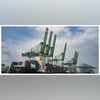
Shipping containers at a port in India. (Representative image from Bloomberg)
5 min read Last Updated : Jan 06 2026 | 8:36 PM IST
Listen to This Article
In the Union Budget for FY26, Finance Minister Nirmala Sitharaman had allocated a generous ₹11.2 trillion towards capital expenditure.
But looking beyond the end of this fiscal year, which is close, the finance ministry is running out of infrastructure sectors that can soak in allocations of ₹2 trillion or more every year. For North Block, other than roads and railways in the transport sector (see table), few other sectors have been able to come up with spending plans on that scale for the forthcoming Budget. As of now, there are few alternatives from among the remaining sectors, including aviation, logistics and maritime.
This poses a problem for the government, given that these numbers are heavily tracked because they indicate how robust the government-led capital expenditure pipeline will be in FY27.
The government is hoping to bring in the delta through the shipping and ports sector, to some extent. The Union Cabinet has already approved a ₹69,725 crore package aimed at “developing a globally competitive, technologically advanced and sustainable maritime sector”.
The capex allocation in Budget FY26 was ₹1 trillion more than the revised estimates for the previous fiscal, of which 46.8 per cent went to roads and railways. Against this, the ports and shipping sector got just ₹1,761.35 crore. This picture could change this time.
The two mega transport ministries of roads and railways have struggled to use up the capex they have been given, though utilisation rates, after remaining sluggish for some time, have begun to climb compared to FY25. At the end of December 2025, as per government data, the Railways had spent 80.54 per cent (Rs 2.03 trillion of the total Gross Budgetary Support of ₹2.52 trillion).
“This represents a 6.54 per cent increase in utilisation compared to the same period last year (December 2024),” a ministry statement noted. The expenditure has primarily focused on safety measures, capacity enhancement, infrastructure modernisation and passenger amenities. But given the pace of utilisation, the numbers are unlikely to go up much higher.
“For the past few years, the Ministry of Railways’ GBS spending plans are on track, with infrastructural works being executed expeditiously. They also suggest that the targets for FY2025-26 are likely to be fully achieved,” said a senior officer at the Rail Bhawan. The official said the Union Budget for FY27 will likely hit the same levels of capex.
At the roads and surface transport ministry, various works in about 26,425 km of national highway projects were awarded at a cost of ₹8.5 trillion. That does not tell the real story. Spending from its own budget for capex is just 65 per cent at the end of November, as per government accounts data.
However, in both the Railways and the ministry of roads and surface transport, the implementing agencies have reached their capacity limits. In FY26, for instance, of the basket of road projects awarded, only 1 per cent, measured by kilometres, were under the build-operate-toll mode, applicable for the private sector. Engineering, procurement and construction was the preferred mode for over 56 per cent of the projects.
Krishan Binani, director, Corporate Ratings at Ind-Ra, said that “India’s highway sector is facing challenges, with muted central road award activity for the past two years, leading to increased competition and persistent project execution issues. Although state awards have come to the rescue, the sector is likely to continue to witness subdued revenue and margins.”
Within the transport sector, that means the weight of additional capex has to be borne by the civil aviation ministry and the ministry of ports, shipping and waterways. The former has largely handed over mega projects to the private sector. The government-run Airports Authority of India only has peripheral airports under development. Development plans for Kolkata and Chennai are expected to cost just ₹6,300 crore.
This leaves only the maritime sector as the bright spot. While the shipping ministry has been given a substantial budget, the timeline is stretched over several years. The sum includes the Shipbuilding Financial Assistance Scheme (SBFAS), the Maritime Development Fund (MDF) and the Shipbuilding Development Scheme (SbDS). The SbDS has an outlay of ₹19,989 crore to expand shipping capacity to 4.5 million gross tonnage annually while supporting greenfield shipbuilding clusters.
A senior ministry official said that in discussions with the finance ministry, it was pointed out that funds utilisation has to be a multi-year project. The Railways have also offered a five-year plan to the finance ministry. One of these is a vast project to double the capacity of major cities to originate new passenger trains. As per the plan, 48 major cities will be included in the list. Some of these, an official explained, are already in the planning stages, while some have already been sanctioned. The Railways has also rationalised the passenger fare structure with effect from December 26, 2025, the second time it has done so in the calendar year. However, this fundraise is expected to only plug gaps in revenue expenditure; in a press release, the ministry said the hike in fares will meet the objective of balancing affordability for passengers with the sustainability of operations.
Meanwhile, the roads and surface transport ministry hopes to raise ₹30,000 crore through various modes of asset monetisation during the current financial year.