


$24.6 bn clean energy financial flows to developing nations in 2024: UN rpt
International public financial flows for clean energy reached $24.6 billion in 2024, while progress on electricity access and clean cooking remained too slow to meet SDG 7 targets
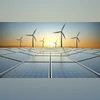 "Future of Clean Energy")
The report says that despite some gains, progress on access to electricity remains far too slow
Listen to This Article
International public financial flows to developing countries in support of clean energy registered only limited growth relative to needs, rising marginally to $24.6 billion in 2024 from $24.4 billion in 2023, according to the latest edition of Tracking SDG 7: The Energy Progress Report.
The report was published jointly by the Sustainable Development Goal (SDG) 7 custodian agencies — the International Energy Agency (IEA), the International Renewable Energy Agency (IRENA), the Statistics Division of the United Nations Department of Economic and Social Affairs (UN DESA), the World Bank and the World Health Organization (WHO).
The report will be presented to policymakers at a special launch event on July 8, 2026, following the in-depth review of SDG 7 at the High-Level Political Forum on Sustainable Development in New York, which oversees progress on the Sustainable Development Goals (SDGs).
“Despite the high cost of debt creating economic strain across developing countries, debt-based financing continues to be the main form of international public clean energy finance, accounting for about 80 per cent of total flows in 2024,” the agencies said in a statement.
The report says that despite some gains, progress on access to electricity remains far too slow.
Also Read

 "World bank")
 "World bank")
 "Santosh Janardhan, VP Infrastructure, Meta")
 "World bank")
 "Strait of Hormuz closure, Global oil supply shock, US crude exports, China oil demand slowdown, Energy market resilience")
In 2024, the global electricity access rate stagnated at 92 per cent, while annual growth in access halved compared with the previous decade.
Sub-Saharan Africa and rural populations continue to lag behind, with the rural electricity access deficit in Sub-Saharan Africa increasing from 376 million people in 2010 to 447 million in 2024.
The report also states that the largest energy gap remains access to clean fuels and technologies for cooking.
“Progress is uneven, with a stark urban-rural divide: 89 per cent of the urban population have access to clean cooking compared to only 56 per cent of people living in rural areas,” it said.
Renewable energy now supplies more than 30 per cent of global electricity generation, but its contribution to heating and transport remains limited.
Despite record growth in renewable energy capacity, significant disparities persist between countries.
The report said renewable energy-generating capacity in low-income countries stood at only 33.6 watts per person, compared with 1,224 watts per person in high-income countries.
“Recent global energy shocks have made one thing clear: Countries with strong renewable energy capacity are better positioned to withstand economic and supply disruptions. Accelerating the deployment of cost-competitive domestic renewables must now be central to strengthening both energy security and economic resilience, while pursuing SDG 7,” said Francesco La Camera, Director-General of the International Renewable Energy Agency.
More From This Section
 "pharma, drugs, medicine")
 "bharti airtel")
 "Telecom tower")
 "Andhra govt, chandrababu naiu")
 "Coal, Coal India")
Don't miss the most important news and views of the day. Get them on our Telegram channel
First Published: Jun 25 2026 | 11:49 AM IST