


Why your alcohol, fuel bills won't see any reduction under GST 2.0 reforms
Despite sweeping reforms to the goods and services tax, alcohol and petrol remain outside its ambit, shielded by Constitutional provisions and states' heavy dependence on excise revenues
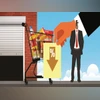 "GST Reforms")
Alcohol for human consumption was left outside GST by the Constitutional amendments that created the GST framework.
Listen to This Article
The much-awaited GST reforms are finally here and, as was expected, Indian consumers have gotten major reprieves in daily essentials, a move that the government hopes will push consumption growth.
However, the reforms are not without their share of omissions. For example, in GST 2.0, your favourite carbonated beverage has become a sinful indulgence, while your alcoholic one remains completely out of its orbit. Sugary drinks have been dragged into the so-called 'sin goods' bracket, now in the same category as cigarettes and tobacco products, with a higher GST rate. Petrol and diesel, too, remain outside the purview of the taxman, despite longstanding demand to absorb them into the GST regime.
Why were alcohol and petrol left out of GST 2.0?
Alcohol for human consumption was left outside GST by the Constitutional amendments that created the GST framework.
The 101st Constitutional Amendment Act, 2016 (which introduced the GST regime) inserted Article 366(12A) into the Constitution, which defines GST as a levy on the supply of goods and services, or both, but specifically excludes alcoholic liquor “meant for human consumption”. In other words, alcohol remains outside the GST net by Constitutional decree.
Similarly, five petroleum products including crude oil, petrol, high-speed diesel, natural gas, and aviation turbine fuel are currently excluded, with the power of bringing them under GST remaining vested with the GST Council. Electricity too does not fall within the ambit of GST. In short, while alcohol is a carved-out exception, petroleum is a conditional inclusion that the GST Council can activate later.
Also Read

 "Nirmala Sitharaman, Nirmala")
 "Tesla, Elon Musk")
 "Repo-linked loans: Home buyers to see higher outgo in initial years")
 "artificial sweeteners")
 "China, China flag")
For consumers, the immediate outcome is a status quo ante as state variations in retail prices for petrol and alcohol will continue. For industry and policymakers, the decision keeps the option of future inclusion on the table.
Alcohol a money-spinner for states
The key reason behind leaving alcohol untouched is both political and practical: revenue. State governments collect large sums from excise duties and value-added taxes on alcohol, and from state levies on fuel sales. These collections are an important, often significant, part of states' budgets.
In many states, liquor sales contribute between 15 and 25 per cent of their internal tax revenues, giving them crucial fiscal room to fund welfare and development programmes. According to tax specialists, bringing alcohol within the GST framework would reduce this revenue stream to a trickle. Such a move would also strip states of control over one of their most reliable sources of income.
Moving these items into GST would also raise issues over sharing of revenue between the Centre and states, something that has been behind states' recalcitrance so far. Past GST Council deliberations have deferred the matter precisely because of its potential fiscal impact on both states - which might see reduced fiscal autonomy - and the Centre, which currently levies excise duty on petrol and diesel that forms a significant portion of its indirect tax collections.
Additionally, international crude prices are volatile and absorbing that volatility into a single national GST rate would complicate fiscal policy. Currently, when fuel prices rise globally, both the Centre and states adjust excise duties (by the Centre) and VAT and sales tax (by states) separately to manage revenues and price impacts locally. Under a single GST rate, the burden of managing pump prices would solely be the responsibility of the Centre, and any additional subsidy to keep prices stable for end users would impact the fiscal deficit.
Supply-chain considerations
Excluding petrol and alcohol also reflects practical tax-chain issues. Several businesses, such as logistics, aviation and manufacturing, use petroleum products as inputs. Bringing fuel under GST would change input tax credit rules and could require complex recalibration to avoid either double taxation or unintended tax breaks. Critics of the exclusion say it breaks the GST goal of a seamless credit chain, while supporters say the costs of stitching these products into GST without a sound transition plan would be higher than the immediate gains.
Secondary industries under GST, though
However, none of this is to say that alcohol and petrol are fully outside the ambit of GST. While liquor meant for drinking is kept outside GST, many activities around it are not. Services such as bottling, packaging, advertising, transport, equipment supply, and maintenance all attract GST, creating a dual system: the beverage itself is taxed by states, but much of its supply chain falls within GST. Similarly, activities around setting up of, processing, and transport of petroleum products are all under the ambit of GST.
Globally, countries differ in their approach to taxing alcohol. Australia and New Zealand apply a uniform GST, while several others continue to rely on special excise duties. India has opted for the latter path, balancing two priorities: securing state revenues and using higher state levies as a social deterrent to discourage excessive consumption.
More From This Section
 "forex")
 "goods and services tax, GST")
 "Gold, jewellery")
 "Nirmala Sitharaman, Nirmala")
 "shop, market, food items, snacks, chips, fmcg,")
Topics : BS Web Reports GST Revamp GST reveunes
Don't miss the most important news and views of the day. Get them on our Telegram channel
First Published: Sep 05 2025 | 8:29 PM IST