


India to impose 30% import duty on yellow peas to support domestic prices
Move effective from November 1 aims to curb cheap imports from Canada, Australia and Russia
 "Yellow Peas")
According to the notification, shipments with a bill of lading dated on or before October 31, 2025, will be exempt from the duty
Listen to This Article
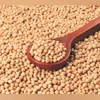
The central government late Wednesday night finally imposed a 30 per cent effective import duty on yellow peas from November 1, announcing the step after months of speculation to check unrestricted imports and stem the fall in prices of domestic pulses.
Coming ahead of the rabi-sowing season, the duty also seeks to shore up chana prices that have dropped sharply in the past few weeks.
Chana is the largest pulse crop grown in India, sowing of which will begin in the next few days. The import duty on yellow peas was scrapped in December 2023, and the results were there to see immediately.
According to trade sources, mandi prices of chana rose by ₹50-100 per quintal on Thursday in most markets due to the import duty while that of tur rose by ₹25-50 per quintal.
There was no change in mandi prices of urad between Wednesday and Thursday while masur rates rose by almost ₹100 per quintal between the two days.

 "pulses")
 "IND vs AUS WCWC SF")
 "Larsen and Toubro")
 "Service sector")
 "Insurance")
The maximum rise was seen in mandi prices of yellow peas, which moved up by ₹150-325 per quintal from around ₹3,500 per quintal to around ₹3,800 per quintal between the two days.
“The landed price of yellow peas, which was ₹32-33 per kg, will immediately go up for new shipments by almost ₹9 per kg. This should have a cascading impact on the prices of other pulses as well,” said Rajesh Paharia Jain, chief manager-business development at Kribhco Agri Business Ltd.
The average mandi prices of pulses — including urad, tur, masoor and moong — have been trading below their respective minimum support prices (MSPs) due to the influx of cheap yellow peas from Canada and Russia.
Traders said mandi prices of tur and urad were being quoted at ₹6,100-7,000 per quintal while their respective MSPs were ₹7,000 per quintal and ₹7,400 per quintal, respectively.
Moong was selling at around ₹6,600 per quintal while the MSP was ₹8,682 per quintal. Chana too was selling significantly lower than its MSP of ₹5,875 a quintal.
Shipments with a bill of lading dated on or before October 31 are exempt from the duty, the government said.
It had earlier allowed duty-free imports of yellow peas until March 31, 2026, but domestic farmers had urged the authorities to curb the influx of cheap imports.
India imported around 7.2 million tonnes (mt) of pulses in 2024-25 (FY25), of which yellow peas alone comprised 30 per cent (almost 2.2 mt).
The drop in mandi prices of pulses was so sharp that the government a few days back approved a major procurement plan for pulses and oilseeds worth around ₹15,095.83 crore. The plan is being implemented in Telangana, Odisha, Maharashtra, and Madhya Pradesh for kharif 2025-26. It also includes approval for the launch of Bhawantar Bhugtan Yojana for soybeans in Madhya Pradesh.
That apart, permission has also been given for 100 per cent procurement of mung beans, black gram, and soybean for Telangana farmers, full procurement of pigeon pea for Odisha, and the largest procurement of mung beans, black gram, and soybean in Maharashtra under the price support scheme.
Agriculture Minister Shivraj Singh Chouhan had a few months back written to the Union finance ministry to re-impose the import duty on yellow peas to check price fall and protect farmers.
More From This Section
 "Suman Bery, Suman, Bery")
 "Only 12 of 82 approved applicants, or nearly 15 per cent, under the production-linked incentive scheme for the automobile and auto component industry (PLI-Auto) have achieved the mandated 50 per cent domestic value addition (DVA) target, according to")
 "sugarcane")
 "tax")
 "PM Modi, Narendra Modi")
Topics : pulses import pulses yellow peas chana dal Pulse prices
Don't miss the most important news and views of the day. Get them on our Telegram channel
First Published: Oct 30 2025 | 10:30 AM IST