


India, UK sign free trade agreement; set to boost $34 bn in annual trade
The India-UK FTA cuts tariffs, expands market access, and introduces mutual regulatory easing; Vision 2035 roadmap was also unveiled during PM Modi's UK visit
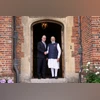 "Prime Minister Narendra Modi meets Keir Starmer")
Britain's Prime Minister Keir Starmer and Prime Minister Narendra Modi sign India-UK Sign Free Trade Agreement at Chequers near Aylesbury, England, Thursday, July 24, 2025. | Photo: Reuters
Listen to This Article
India and the United Kingdom officially signed a Free Trade Agreement (FTA) on Thursday during Prime Minister Narendra Modi’s visit to the UK. The deal is expected to increase bilateral trade by $34 billion annually, making it the most significant trade pact for the UK since leaving the European Union and the most comprehensive one India has signed.
"Britain is open for business," Starmer announced while addressing the press after signing the FTA with Prime Minister Narendra Modi. He said, "It is a deal that will bring huge benefits to both of our countries, boosting wages, raising living standards and putting more money in the pockets of working people. It is good for jobs, it is good for business, cutting tariffs and making trade cheaper, quicker and easier."
He announced GBP 6 billion in investment and export between India and the UK which is expected to create more than 2,200 jobs for British workers.
"This agreement is not merely an economic partnership, but a plan for shared prosperity," PM Modi said, adding that the UK trade agreement ensures better market access for Indian textiles, footwear, gems & jewelry, seafood, and engineering goods.
"I am delighted that after many years of hard work, a Comprehensive Economic and Trade Agreement has been concluded between our two countries today," he added.
Addressing the Indian diaspora in the UK, Pm Modi said, "The people of Indian origin in the UK form a living bridge that connects our two nations. They did not just bring curry from India, but also creativity, commitment, and character."
Also Read

 "Modi, Narendra Modi")
 "India UK TARDE, India, UK")
 "Narendra Modi")
 "UK INDIA, INDIA UK TRADE, TRADE INDIA UK")
 "Modi, Narendra Modi")
The signing took place at Chequers, the UK Prime Minister’s official country residence, in the presence of Prime Minister Modi and British Prime Minister Keir Starmer. The agreement comes after years of negotiation and is accompanied by the announcement of the UK-India Vision 2035, aimed at expanding cooperation in sectors beyond trade.
India-UK FTA key provisions
Key features of the India-UK free trade agreement include:
Tariff reductions
India will significantly reduce tariffs on several high-value British exports. This includes cutting Whisky tariffs to 40 per cent from 150 per cent over 10 years; car import duties will fall to 10 per cent from over 100 per cent, under a quota system; and tariffs on gin, cosmetics, and medical devices will also be eased.
Indian export access
The UK will provide zero-duty access to 99 per cent of Indian goods, including textiles, leather, marine products, gems, jewellery, toys, and sports goods.
Regulatory simplification
The deal aligns sanitary and phytosanitary (SPS) standards, which will reduce export health certificate requirements and lower the rate of border rejections for Indian agri-food products.
Ease of doing business
Indian professionals and firms will be exempt from UK social security payments for up to three years, under a double contribution exemption.
Public procurement access
Indian businesses will be able to compete for public contracts in sectors like transport, energy, and healthcare in the UK.
UK-India Vision 2035
Alongside the trade deal, the two prime ministers also unveiled the UK-India Vision 2035. This roadmap outlines plans for deeper cooperation in defence through a new industrial partnership, joint initiatives on climate change and clean energy, enhanced education and research ties, and strengthened border and security collaboration.
More From This Section
 "European Union, EU")
 "algorithm, artificial intelligence, Technology, data security")
 "PMI, PMI INDIA")
 "Donald Trump, Trump")
 "David Lammy")
Topics : India UK relation India UK FTA talks BS Web Reports
Don't miss the most important news and views of the day. Get them on our Telegram channel
First Published: Jul 24 2025 | 3:13 PM IST