


Mix of factors prompt India-China military talks in eastern sector
Chinese President Xi Jinping's expected India visit, border talks in Beijing in August and a ground issue seem to have contributed to the decision
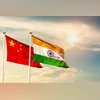
India china(Photo: Shutterstock)
Listen to This Article
High-ranking military officials from India and China met on Sunday to discuss the eastern sector of the Line of Actual Control (LAC), the de facto border.
While the now-stable bilateral relationship, the expected India visit of Chinese President Xi Jinping for the Brics summit over the weekend, as well as the last round of India-China boundary talks by special representatives National Security Adviser Ajit Doval and Chinese Foreign Minister Wang Yi in Beijing in August, may have prompted the first corps commander-level talks in this sector, a ground issue had also occurred in the summer.
The eastern sector covers 1,400 kilometres (km), running along Sikkim and Arunachal Pradesh.
Sunday’s meeting at the “Wacha-Damai border point” in Arunachal was led by Lt Gen Girish Kalia, commander of the Indian Army’s III Corps, and an unnamed senior officer of the People’s Liberation Army (PLA), most likely from its Western Theater Command.
In July, tension emerged in Taksing, a remote village in the Upper Subansiri district of Arunachal Pradesh after locals sighted PLA soldiers or markings in a “not-demarcated part” of the nearby border, according to sources who spoke on the condition of anonymity.
Also Read


The Indian Army has patrolled the area in the past, as has the PLA, according to the sources.
It is not uncommon to find damaged bunkers or “markings such as left-behind small rocks” along patches of the border but this might have been an unexpected appearance by the PLA or their graffiti.
It is unclear if Indian Army deployment to the border in Arunachal Pradesh has increased since but patterns of troop movements might have changed, including the holding of exercises, according to the sources.
Since the Sino-Indian war of 1962, China has claimed the Indian state of Arunachal Pradesh, even calling it Nanzang (“southern Tibet”) in government communication. Xizang is the official Chinese name for Tibet. To counter Chinese cartographic campaigns of renaming places in other countries, the Indian government, in August, officially standardised the names of 27 locations and natural features in Arunachal Pradesh on its maps.
The western sector of the India-China border runs along Ladakh and the Chinese-controlled Aksai Chin region, which India claims. This sector of some 2,000 km is the most militarised zone of the India-China border. Most rounds of military talks between India and China have taken place on this.
The middle sector, a 625 km or so stretch along Himachal Pradesh and Uttarakhand in India, and Tibet in China, is the least contentious part of the border dispute.
A joint statement after the Doval-Wang meeting said the two countries agreed to promptly address any ground situation through existing diplomatic and military channels.
That was among “eight outcomes” in August.
More From This Section


Topics : India China relations India China
Don't miss the most important news and views of the day. Get them on our Telegram channel
First Published: Sep 07 2026 | 8:31 PM IST