


Japan will invest 10 trillion yen in India over next decade: PM Modi
The announcement comes after Prime Minister Narendra Modi and his Japanese counterpart, Shigeru Ishiba, held talks during the 15th India-Japan Annual Summit in Tokyo
 "Modi, Narendra Modi, Shigeru Ishiba")
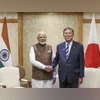
Prime Minister Narendra Modi with his Japanese counterpart Shigeru Ishiba during the India-Japan Economic Forum, in Tokyo, Japan. (Photo: PTI)
Listen to This Article
Japan is set to invest 10 trillion yen (about $67 billion) in India over the next decade to strengthen partnerships across a range of sectors, including defence, technology, and critical minerals, Prime Minister Narendra Modi announced on Friday at an event in Tokyo hosted by his Japanese counterpart Shigeru Ishiba.
The announcement followed talks between the two leaders during the 15th India-Japan Annual Summit in Tokyo on August 29–30.
“Today, we have laid a strong foundation for a new and golden chapter in our Special Strategic and Global Partnership. We have set a roadmap for the next decade,” Modi said. “We have set a target of 10 trillion yen investment from Japan in India over the next ten years.”
Also Read

 "Modi, Narendra Modi")
 "PM Modi")
 "Centre may raise purchase price of cane ethanol by up to Rs 3 per litre")
 "PM Modi in Tokyo")
 "Modi, Narendra Modi")
Bilateral partnership and global stability
Modi emphasised that the partnership between the two countries was significant not only for India and Japan but also for global peace and stability. “We both agree that as two major economies and vibrant democracies, our partnership is very important not only for our two countries, but also for global peace and stability. Strong democracies are natural partners in shaping a better world,” he said.
Building on previous investment targets
The new goal builds on the earlier target of 5 trillion yen in public and private investment and financing from Japan to India, agreed in 2022. Both sides noted progress towards the existing figure and committed to doubling investment flows.
Ishiba said Japanese firms could expand supply chains in India and called for continued regulatory reforms to improve the business environment. Modi acknowledged Japan’s contribution to job creation and innovation in India and said further reforms would be introduced to attract more investment.
The two leaders reviewed cooperation in technology, climate change, tourism, industrial capital goods and small businesses, and signed new agreements in these areas.
Semiconductors, high-speed rain, MSMEs in focus
Launch of the India–Japan Economic Security Initiative to secure supply chains and boost cooperation in semiconductors, telecom, pharmaceuticals, critical minerals, and clean energy.
The also agreed upon bilateral efforts to support Japan Industrial Townships (JITs), and cooperation in stregethening micro, small and medium enterprises (MSMEs), logistics, textiles, automotives, and industrial capital goods under the India-Japan Industrial Competitiveness Partnership (IJICP).
Ongoing collaboration on the Mumbai–Ahmedabad High Speed Rail with plans to introduce Japanese Shinkansen E10 series technology in the early 2030s.
Continued cooperation on Defence
Both the nations also adopted a Joint Seclaration on Security Cooperation elevating bilateral defence ties.
Expanding on military cooperation, India also welcomes the Japan Maritime Self Defense Force’s (JMSDF) participation in MILAN exercise, a multi-lateral exercise hosted by India, as well as the participation of the Japanese team in exercise Tarang Shakti, the first multilateral exercise hosted by the Indian Air Force, the MEA said.
Both India and Japan also asserted on continued collaboration on defence equipment and technology with a push for concrete outcomes, India's ministry of external affairs (MEA) said in a statement.
On science, tech, and innovation
Modi and Ishiba also announced the launch of Japan-India artificial intelligence (AI) Cooperation Initiative, which is aimed at deepening bilateral and multilateral cooperation on artificial intelligence, including Large Language Models (LLMs), establishing platforms for exchange between industry and academia, supporting joint research projects, and facilitating the development and operations of data centers in India, the ministry said.
PM Modi also invited Ishiba to attend the AI Impact Summit, which will be hosted by India on February 19-20, 2026.
Clean energy and climate
The two leaders also signed a Memorandum of Cooperation on Joint Crediting Mechanism, which aims to facilitate the diffusion of decarbonising technologies, products, systems, and infrastructure, promoting Japanese investment in India and India’s sustainable development.
They also issued a Joint Declaration of Intent on Clean Hydrogen and Ammonia to advance research, investment and project implementation on hydrogen/ammonia, and to deepen collaboration on new technologies.
Action plan for human resource exchange
The outcomes of the meeting also includes the adoption of an action plan for human resource exchange, focusing on the mobility of 500,000 personnel in five years between the two countries, including 50,000 skilled professionals from India.
On Pahalgam attack
The two leaders also discussed the Pahalgam terrorist attack that killed 26 people, and called for “resolute actions” to dismantle safe havens, cut financing channels linked to transnational crime, and curb cross-border movement of terrorists, the ministry said.
More From This Section
 "Modi, Xi Jinping")
 "China flag")
 "Modi, Narendra Modi")
 "Piyush Goyal, Piyush")
 "SS")
Topics : Narendra Modi Japan foreign investment Tokyo artifical intelligence Defence clean energy BS Web Reports
Don't miss the most important news and views of the day. Get them on our Telegram channel
First Published: Aug 29 2025 | 8:27 PM IST