


Terrorism from Pak soil a breach of Indus Waters Treaty: India at UN event
India refutes Pakistan's claims of Indus Waters Treaty breach, citing cross-border terrorism. Both nations present opposing views at UN glacier conference in Dushanbe, Tajikistan
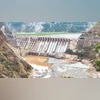 "Salal Dam on the Chenab river in Reasi district of J&K on Monday. Water levels in the river have dropped sharply after its flow was restricted through Baglihar and Salal dams, days after India suspended Indus Waters Treaty with Pakistan | photo: pti")
India placed the IWT in abeyance following a deadly terrorist attack on April 22 in Pahalgam. | Representational Photo
Listen to This Article
India has dismissed Pakistan’s claims that it is violating the Indus Waters Treaty, saying instead that Pakistan’s continued support for cross-border terrorism is affecting the proper implementation of the agreement, according to a PTI report.
Speaking at the plenary session of the first United Nations conference on glaciers in Dushanbe, Tajikistan, on Friday, India’s Minister of State for Environment Kirti Vardhan Singh said that terrorism from Pakistani soil is itself a violation of the treaty.
“We are appalled at the attempt by Pakistan to misuse the forum and to bring in unwarranted references to issues which do not fall within the purview of the forum. We strongly condemned such an attempt,” Singh said.
He pointed out that the situation has changed significantly since the treaty was signed, and that new developments warrant a fresh look at the treaty’s responsibilities.
He said these include “technological advancements, demographic changes, climate change and the ongoing threat of cross-border terrorism”. The minister also highlighted the original intent behind the agreement, noting that it was founded on mutual goodwill.
Also Read

 "Anil Chauhan, Anil, CDS")
 "BJP leader Ravi Shankar Prasad (Photo: ANI)")
 "Shahid Afridi")
 "Shashi Tharoor, Shashi, Tharoor")
“However, the unrelenting cross-border terrorism from Pakistan interferes with an ability to exploit the treaty as per its provisions. Pakistan, which itself is in violation of the treaty, should desist from putting the blame of the breach of the treaty on India,” he added.
Pakistan’s objection at the conference
Earlier at the same event, Pakistan’s Prime Minister Shehbaz Sharif criticised India for holding the treaty in abeyance. He warned that any move to abandon the agreement could endanger lives and lead to serious consequences.
“India's unilateral and illegal decision to hold in abeyance the Indus Waters Treaty, which governs the sharing of the Indus Basin's water, is deeply regrettable,” Sharif said, according to Pakistan’s Dawn newspaper.
Sharif stressed that Pakistan would not tolerate any breach of the treaty, which he said was essential to millions of people.
Treaty put in 'abeyance' after Pahalgam terror attack
India had placed the IWT in abeyance following a deadly terrorist attack on April 22 in Pahalgam, Jammu and Kashmir, which claimed 26 lives. The move was part of several diplomatic punitive actions taken against Pakistan.
The IWT was signed in 1960 by India and Pakistan, with the World Bank acting as a guarantor. It outlines how water from the Indus river system - which includes five other rivers - is to be shared between the two countries.
Focus of the UN Conference
The three-day UN conference on glaciers aims to raise awareness about the role glaciers play in maintaining global ecological stability and tackling water-related challenges.
More than 2,500 delegates from 80 UN member states and 70 international organisations are taking part in the event, which ends on Saturday.
Developed countries must lead climate action: India
Meanwhile, addressing the plenary session of the first UN conference on glaciers in Dushanbe, Tajikistan, Minister of State for Environment Kirti Vardhan Singh said glaciers are retreating everywhere and India, with its large Himalayan territory, is experiencing these impacts first-hand.
"According to the Intergovernmental Panel on Climate Change, glaciers have been losing mass worldwide since the 1990s, and this rate of loss has accelerated in the 21st century... Their retreat is not just a warning; it is a reality with serious consequences, both short and long term, for water availability, food security, biodiversity and the well-being of billions of people, he said.
He said preserving glaciers needs a strong global response to greenhouse gas emissions and rising temperatures. "Countries that have contributed the most to global historical cumulative greenhouse gas emissions must lead in immediate, drastic and sustained emission reductions," Singh said.
More From This Section
 "Delhi mock drill, blackout")
 "Pete Hegseth")
 "Rajesh Kumar Singh, Rajesh Kumar, Defence Secretary")
 "S Jaishankar, Jaishankar")

Don't miss the most important news and views of the day. Get them on our Telegram channel
First Published: May 31 2025 | 5:54 PM IST