


Pvt firms, DRDO and DPSUs must work together to strengthen IAF: MoD report
IAF's active squadrons have fallen to 31 against the authorised 42, with an ageing fleet and delayed inductions exacerbating the issue
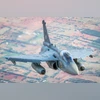 "Caption: Indian Air Force's Light Combat Aircraft (LCA) Tejas Mk-I. Image Credit: PIB")
Listen to This Article
Efforts to enhance Aatmanirbharta (self-reliance) in the aerospace sector need greater momentum, with the private sector complementing the efforts of defence public sector undertakings (DPSUs) and the Defence Research and Development Organisation (DRDO), said an empowered committee report on strengthening the Indian Air Force’s (IAF’s) capabilities. The report was presented by Defence Secretary Rajesh Kumar Singh to Defence Minister Rajnath Singh on Monday, amid growing calls from the IAF leadership for greater private sector involvement to accelerate aircraft production rates.
The Empowered Committee for Capability Enhancement of the IAF "has identified key thrust areas and made recommendations for implementation in the short, medium and long term" to achieve the IAF’s capability enhancement goals in an optimal manner, the Ministry of Defence (MoD) said in a statement on Monday. Appreciating the committee's work, the defence minister directed that its recommendations be followed up in a time-bound manner.
Air Chief Marshal A.P. Singh on Friday said the IAF needs to induct 35 to 40 fighter jets annually to address the shortage in numbers. He noted that Hindustan Aeronautics Limited's (HAL's) promised production rate of 24 Tejas Mark-1A jets per year was insufficient, emphasising the need to explore additional options to bridge the gap. In this context, he called for greater private sector involvement. Speaking at the Chanakya Dialogues conclave, he stated that private participation could help the IAF secure the additional 12-18 jets required annually beyond HAL's committed capacity.
The IAF's active squadrons have fallen to 31 against the authorised 42, with an ageing fleet and delayed inductions exacerbating the issue. Long-term solutions, including Multi-Role Fighter Aircraft (MRFA) and Tejas Mk-1A induction, and projects like Tejas Mk-II and Advanced Medium Combat Aircraft (AMCA), are facing delays or remain years away, underscoring the need for immediate measures to address this critical shortfall. Multiple fighter jets currently in service with the IAF, including the Jaguar, MiG-29UPG, and Mirage-2000, will also be phased out by the end of the decade.
At Aero India 2025 in Bengaluru last month, HAL Chairman and Managing Director (CMD) D.K. Sunil had addressed the IAF's concerns regarding delivery delays and production capacity, stating that from 2025-26, HAL would be in a position to manufacture 24 Tejas jets annually.
Also Read

 "APJ Abdul Kalam")
 "DRDO")
 "India's Multi-Influence Ground Mine (MIGM)")
 "DRDO")
 "Defence Research and Development Organisation (DRDO) conducts a successful flight test of the New Generation AKASH air defence missile from the Integrated Test Range, Chandipur, off the coast of Odisha on January 12, 2024. Image credit: PIB")
The HAL CMD had also assured that the first deliveries of the Tejas Mk-1A were scheduled to begin by the end of 2025, following a delay of almost two years. Addressing media queries about the delay in supplying the aircraft to the IAF, he had stated that HAL would deliver 11 LCA Mk-1A aircraft by the end of 2025-26. "All LCA Mk-1As will be delivered by 2031-32," he had added.
The IAF has contracted 83 Tejas Mk-1A aircraft, an advanced variant of the operational Tejas Mk-I, with deliveries initially planned to begin in February 2024. Additionally, the IAF has moved forward with a proposal to procure 97 more Tejas Mk-1A aircraft, for which an acceptance of necessity has been granted, and a request for proposal has been issued. As of December, the contract negotiation committee process was in progress for these additional aircraft. By December, the IAF had operationalised two squadrons of Tejas Mk-I, comprising 32 single-seat fighters and four twin-seat trainers, with four additional twin-seaters expected at the time.
The committee was formed under the directions of the defence minister and tasked with examining all relevant issues and formulating a clear plan of action. Chaired by the defence secretary, its members included the vice chief of air staff, secretary (defence production), secretary (department of defence R&D) and chairman DRDO, and the director general (acquisition). The deputy chief of the air staff served as the member-secretary.
More From This Section
 "Protest, Bangladesh Protest")
 "Indian Air Force, Agniveer Vayu trainees,")
 "suicide rope")
 "India-China flag")
 "Defence Minister Rajnath Singh meets Princess Astrid of Belgium in New Delhi | Photo: X/ @rajnathsingh")
Topics : DRDO PSUs defence sector
Don't miss the most important news and views of the day. Get them on our Telegram channel
First Published: Mar 03 2025 | 9:47 PM IST