


Trump scraps US education dept: Immigrant kids, STEM, research to be hit
This will not only impact the students themselves but also US industries that rely on skilled workers, says Scott Cooper, a US-based immigration attorney
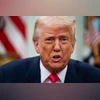 "US President Donald Trump")
US President Donald Trump | Bloomberg
Listen to This Article
US President Donald Trump has signed an executive order to begin dismantling the Department of Education, a federal agency responsible for managing billions in funding and overseeing education policy across the country. The move, announced on Thursday, follows a long-standing demand from conservative groups.
“We’re going to eliminate it, and everybody knows it’s right,” Trump said during a White House event. “We have to get our children educated. We’re not doing well with the world of education in this country, and we haven’t for a long time.”
According to a White House fact sheet, Education Secretary Linda McMahon has been directed to “take all necessary steps to facilitate the closure” of the department.
No direct hit, but funding concerns for Indian students
While the closure may not directly affect international students in the short term, experts say the wider consequences of federal funding cuts could eventually hit education and research programmes that benefit foreign students.
Also Read

 "US visa, H4, H1B")
 "student")
 "Donald Trump, Trump")
 "US visa, H4, H1B")
 "US green card, US Passport, US immigration")
“The closure of the Department of Education itself may not have a direct impact on international students, but the consequences of how federal grant funds are managed in its absence will be significant,” Scott Cooper, senior counsel at Fragomen, a US-based immigration law firm told Business Standard.
“We have already seen federal funds being withheld from several institutions, in addition to broader cuts to agency funding that supports research. The ripple effects will likely be felt across STEM and healthcare programmes – fields that attract international students,” he said.
More than 331,000 Indian students were in the US in the 2023–24 academic year. According to the Open Doors report, 42.9 per cent of Indian students in the US chose maths or computer science, while 24.5 per cent were in engineering.
The US remains a popular destination due to its leading universities and flexible curriculum. Its F-1 visa and Optional Practical Training (OPT) route allow STEM graduates to stay and work for up to three years after finishing their degrees.
“Many international students contribute to the US economy and innovation ecosystem by serving as research assistants, teaching assistants, and in other critical roles within federally funded programmes. With reduced funding, these opportunities will shrink,” said Cooper. “This will not only impact the students themselves but also US industries that rely on skilled workers in tech, healthcare and other research-driven fields.”
Shifting talent pool and tighter visa scrutiny
The Trump administration has also come under criticism for tougher scrutiny of visa applications.
“The increasing scrutiny and higher denial rates for international student visa applicants are already discouraging students from choosing the US,” said Cooper. “As a result, we will likely see a continued shift of talent to other countries such as Canada, Australia, and the UK.”
Congressional hurdle and state-level impact
Ajay Sharma, founder of Abhinav Immigration Services, said the order may face legal and legislative hurdles.
“The decision or plan to shut down the Education Department would require approval from Congress,” said Sharma. “If a significant bill is to be introduced, it would also need a Senate majority. Like many other directives since the Trump administration took over, this may require multiple levels of approval.”
He noted that federal funding currently supports a wide range of programmes.
“In practical terms, this means many programmes—loans, bursaries, and other forms of financial assistance—depend on it. If those funds are withdrawn, federally backed schemes could be disrupted, and that would certainly include support for foreign students,” said Sharma.
However, he pointed out that education in the US is largely a state subject.
“If a state can afford to maintain its own programmes, the impact may be minimal,” he said. “The effect is likely to be felt more at the higher education level—particularly where major scholarships or loan schemes are involved.”
On children of Indian immigrants, he said public schools could be affected if federal funding is cut, although the administration has indicated that K–12 education would be spared. “Still, there's the possibility that responsibilities could be shifted to other departments, and if that alters how programmes are managed, there could be knock-on effects,” he said.
“The real issue with directives like these is the uncertainty they generate. They often result in a wave of court challenges and political pushback. Short-term effects may not be immediately visible, but they do sow confusion and speculation almost instantly,” Sharma added.
Pushback from universities and legal officials
The administration’s decision follows recent action against institutions like Columbia University and the University of Pennsylvania, where federal grants were frozen over protests and disputes involving policies on antisemitism and transgender athletes.
Earlier this month, the administration suspended $400 million in grants to Columbia following allegations of antisemitism. Indian students were among those leading demonstrations on campus. Another $175 million was withheld from the University of Pennsylvania over its sports policies.
The Department of Education also oversees more than $1 trillion in federal student loans, which are used by around 43 million Americans. The executive order has stirred concern among borrowers over the future of debt collection and loan forgiveness.
Sheria Smith, president of the American Federation of Government Employees Local 252, said, “This executive order is nothing more than an illegal overreach of executive power designed to unemploy dedicated civil servants and decimate the critical services they provide to millions of Americans across this country.”
A group of 21 attorneys general, led by Connecticut’s William Tong, has filed a lawsuit against the Trump administration’s move to lay off more than half the department’s workforce.
“This is a reckless assault on our kids and schools across America,” said Tong. “On funding for special education. For teachers. For school buses. For college financial aid.”
He added, “Donald Trump and Linda McMahon say they will just send this money to the states. I don’t believe that for a single second. They have zero plan and no authorisation to do that.”
The lawsuit argues that dismantling the department without an act of Congress is illegal, since it is an executive agency created by law.
More From This Section
 "Pension")
 "Kiran Nadar")
 "SIP, Systematic Investment Plan")
 "Marriage, Muslim marriage")
 "Mutual funds (MFs) managed a record Rs 66.2 trillion in assets during the July-September quarter, marking a 12.3 per cent increase over the previous three-month period — the highest quarterly jump in MF assets in at least five years.")
Don't miss the most important news and views of the day. Get them on our Telegram channel
First Published: Mar 21 2025 | 12:53 PM IST