


Could social media silence cost you a US student visa? Experts weigh in
The US has begun scrutinising visa applicants' social media activity more closely. Lawyers say even having no posts or private accounts could raise suspicion
 "Donald Trump, Trump")
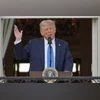
President Donald Trump speaks during a summer soiree on the South Lawn of the White House, Wednesday, June 4, 2025, in Washington. (Photo: PTI)
Listen to This Article
The recent clampdown on immigrants and international students in the US has sparked confusion about the grounds on which visas can be rejected. One of the key questions now being asked is whether a lack of social media presence could hurt someone's chances of getting a visa.
No post, no visa? Not quite
There is no official rule saying that not having social media accounts will automatically lead to a visa refusal. However, immigration lawyers say the absence of an online footprint could still raise red flags.
“As we understand the policy, a lack of social media presence might lead the government to assume the person is attempting to hide their views from scrutiny. That raises concerns that individuals who have opted out of social media for personal reasons could face negative immigration consequences as a result,” Daniel Pierce, partner at Fragomen’s Washington, DC office told Business Standard.
What the leaked cable says
Also Read

 "Donald Trump, Trump")
 "Donald Trump")
 "Donald Trump,Trump")
 "immigration, visa, travel")
 "marriage, wedding")
A cable sent by US Secretary of State Marco Rubio to embassies worldwide instructed consular officers to examine the social media activity of foreigners applying to visit Harvard University. According to Rubio, the move would act as a test case for broader security vetting of visa applicants. Student visa interviews have also been paused temporarily.
The document instructed officers to:
* Search applicants’ social media profiles
* Ask applicants to make those accounts public
* Consider a lack of posts or private settings as suspicious
“Consular officers should consider whether the lack of any online presence, or having social media accounts restricted to ‘private’ or with limited visibility, may be reflective of evasiveness,” said Rubio.
Still, the cable stops short of saying that visas should be denied on that basis alone.
Delays and denials likely
“The government has not explicitly stated what types of issues it may target in its new social media vetting,” said Pierce. “But given the vague nature of the policy, we believe anyone applying for a visa at a consulate is likely to face additional delays while their social media is reviewed.”
He added, “We may also see a rise in visa denials, as individual consulates and consular officers will likely retain broad discretion in applying vague guidance. That could lead to inconsistent outcomes even for applicants with similar profiles.”
Indian students on edge
According to media reports, some Indian students applying to US universities are already taking down social media posts or deleting their accounts altogether, worried that their online history may be misinterpreted.
But lawyers are advising against that.
“Visa applicants likely cannot do much to avoid refusal. Setting accounts to private may cause the government to assume the applicant is hiding something. Deleting or editing posts at this stage could also raise concerns that the applicant previously shared problematic content,” said Pierce.
Legal challenge is difficult
Under US law, challenging a visa denial is extremely difficult.
“Under a doctrine known as ‘consular nonreviewability,’ courts typically refuse to second-guess decisions made by consular officers abroad,” said Pierce.
“There may be ways to challenge the State Department at the policy level—for example, if its guidance to consular offices is flawed or if it exceeds constitutional free speech principles. But individuals who receive denials will likely have no direct legal remedy and will need to reapply and hope for a different outcome.”
Free speech groups raise concerns
Greg Lukiano, president and chief executive of the Foundation for Individual Rights and Expression, said the instructions created a no-win scenario.
“It seems a little bit like a damned if you do, damned if you don’t situation,” he wrote in a blog on 'The Atlantic' on May 31.
“I hadn’t actually thought about the idea that if you post on social media and you say things the government doesn’t like, you can be in trouble — but also if you conspicuously don’t or try to keep them private you can also be in trouble.”
Sofia Cope, staff attorney at the Electronic Frontier Foundation, was quoted by Bloomberg as saying, “Penalising a would-be foreign student or visitor for not being active on social media or keeping their online presence shielded from the general public is an outrageous overreach by the administration.”
Pierce pointed out that any privacy arguments may not hold up in a consular setting.
“It remains unclear whether any privacy rights apply at a consulate. The government will likely take the position that disclosing social media activity publicly is the cost of seeking a visa to the United States,” he said.
More From This Section
 "Georgia Flag")
 "US students, students in US")
 "Donald Trump")
 "UK, UK immigration, UK visa")
 "French visa, france visa, france")
Don't miss the most important news and views of the day. Get them on our Telegram channel
First Published: Jun 05 2025 | 2:54 PM IST