


US truck driver visa pause just start of wider work visa scrutiny: Decoded
US halts worker visas for truck drivers after fatal crash, sparking concern for Indian drivers as wider visa scrutiny looms
 "trucker")
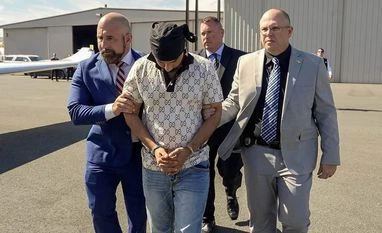
US truck driver visa pause: ‘He thought he could run’: Florida authorities bring back Indian trucker Harjinder Singh to face charges in crash that killed 3. Photo credit: Florida Lieutenant Governor Jay Collins
Listen to This Article
The United States has stopped issuing worker visas for commercial truck drivers in a move announced by Secretary of State Marco Rubio on Thursday. The decision marks the latest in a series of Trump administration efforts to clamp down on foreign workers.
“Effective immediately we are pausing all issuance of worker visas for commercial truck drivers,” Rubio wrote on X. “The increasing number of foreign drivers operating large tractor-trailer trucks on US roads is endangering American lives and undercutting the livelihoods of American truckers.”
His post did not provide statistics or examples to support the claims.
Fallout for Indian drivers
The suspension has sparked concern among Indian nationals working in trucking. US immigration attorney Gnanamookan Senthurjothi cautioned that the move could fuel bias. “These actions of a few international drivers could impact work visa and licence policies and fuel negative publicity and stereotyping,” he wrote on X. “The tragedy has led to backlash and negative media coverage toward all Indian truckers, regardless of legal status, with viral videos reporting ‘Indian drivers’ in fatal mishaps.”
Ajay Sharma, founder of Abhinav Immigration Services, however, told Business Standard that the impact would remain limited.
Also Read

 "Donald Trump")
 "US visa")
 "immigrants, Manhattan, migrants")
 "US visa, H4, H1B")
 "US immigrants, Migrants US")
“The Indian truck drivers normally do not make a significant percentage among international drivers on work authorisation as truckers, because of the multi axle requirements for the type of trucks that they must have had experience on,” said Sharma. He added that the effect would be “miniscule” and not a major worry.
Wider work visa scrutiny
Experts warn that trucking may only be the beginning. Sukanya Raman, immigration attorney and country head at Davies and Associates law firm, told Business Standard that Washington’s review extends far beyond commercial drivers.
“The US administration is reviewing all 55 million current visa holders, including students, tourists, and temporary workers, through a process of continuous vetting,” said Raman. “While trucking visas are the first to be halted, I think other worker visas are under direct scrutiny, and this may just be the beginning.”
She noted that trucking had long been seen as a “blue-collar shortcut” to the US compared to more competitive visa categories such as H-1B, L, or O. “Many Punjabi truckers, who formed a significant share of applicants, may now look to Canada, Europe, or the Middle East as alternatives,” she said.
According to Raman, the message is clear. “This signals discouraging US employers from hiring foreign workers across sectors, not just trucking. Authorities have already flagged English proficiency and road safety concerns, and future reforms may introduce tougher skill, language, and compliance requirements—raising the bar particularly for Indian applicants.”
Despite the heightened rhetoric, Sharma urged a wait-and-see approach. “There’s too much noise from all sides when it comes to US work authorisations as well as relationships,” he said. “We should just wait for some time for this news flow to settle down before coming to any kind of long-term interpretations. My view is ignore the noise and let things settle over the next six months.”
Triggered by fatal crash
The decision follows a fatal crash on August 12, 2025, on the Florida Turnpike involving a truck driver from India who was in the US illegally. Officials said the driver, accused of making an illegal U-turn, had obtained a commercial licence in California after receiving a federal work permit.
The administration has been moving towards stricter controls for months. In April, President Donald Trump signed an executive order tightening English-language requirements for drivers. By May, the Department of Transportation had pledged stronger enforcement.
A State Department official said more than twice as many visas have been revoked since Trump’s inauguration than during the same period in 2024.
The American Trucking Associations (ATA), which has long called for tougher oversight, welcomed the suspension.
“ATA supports pausing work visas for commercial drivers and believes the issuance of non-domiciled CDLs needs serious scrutiny, including the enforcement of entry-level driver training standards,” ATA President and CEO Chris Spear said in a press release. He added that the group had pressed for a nationwide audit launched in June and urged stronger regulation of motor carrier compliance
More From This Section
 "illegal immigrants caught at US")
 "Canada")
 "London, UK")
 "Trump's tariffs on India")
 "US visa")
Don't miss the most important news and views of the day. Get them on our Telegram channel
First Published: Aug 22 2025 | 5:14 PM IST