


Bengaluru Traffic Police push for Wednesday WFH to tackle road congestion
Joint initiative by Bengaluru traffic police, BBMP, and BMTC aims to ease ORR gridlock with Wednesday WFH, staggered shifts, and shuttle services
 "Traffic, Traffic jam, Gurugram Traffic")
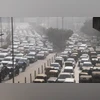
Bengaluru Police propose Wednesday work from home, staggering shifts to ease ORR congestion (Photo: PTI)
Listen to This Article
Bengaluru traffic police have proposed a mid-week Work From Home (WFH) initiative to address the city's chronic traffic congestion, particularly along the heavily burdened Outer Ring Road (ORR).
The news, first reported by local media outlet Bengaluru Mirror earlier this week, states that the plan aims to reduce peak-hour gridlock in the city’s IT corridor by encouraging tech firms to allow employees to work remotely every Wednesday.
The proposal is part of a broader set of traffic decongestion measures developed jointly by the Bengaluru Traffic Police, the Bruhat Bengaluru Mahanagara Palike (BBMP), the Bangalore Metropolitan Transport Corporation (BMTC), and representatives from the IT industry.
Combating peak hour traffic: Staggered shifts, shuttle services
The plan also calls for staggered office hours and greater reliance on organised shuttle services. Officials say the measures are aimed squarely at easing the morning choke between 9:00 and 10:00 am, when traffic on ORR slows to a crawl and often brings movement to a standstill.
Joint Commissioner of Traffic, Karthik Reddy, said companies have been advised to start shifts as early as 7:30 am and schedule internal meetings with commuting times in mind. The city is also asking firms to take more responsibility for employee transport by deploying shuttles and coordinating with BMTC, which has committed to expanding its fleet of air-conditioned buses serving the tech corridor.
Also Read

 "graph, gdp, profit, mutual fund, economy")
 "reit")
 "co-living spaces")
 "PG accommodation, co-living sector, Bengaluru, Gen Z, Co-living market, Colliers India")
 "BMTC buses, lockdown 4.0, Bengaluru Metropolitan Transport Corporation, bus services")
Roadwork, illegal parking puts tech corridor under pressure
The push comes at a time when the city’s infrastructure is under immense strain. Several stretches of ORR are still undergoing delayed roadworks, and narrow junctions continue to be clogged by illegal parking and poor lane discipline.
To address this, police are implementing a zero-tolerance policy on parking violations near tech parks and junctions, with immediate towing now in effect. Companies have been asked to assist with enforcement by deploying traffic marshals and volunteers.
IT industry's take on Bengaluru traffic
Representatives from Bengaluru’s IT sector, including the Greater Bengaluru IT and Companies Association, have said they support the WFH plan, but only if it is enforced properly and communicated in advance. They also requested consideration for periodic Saturday WFH days to ease weekend congestion during events or infrastructure work.
Other suggestions from the sector included:
- Mandatory staggered timings across companies
- Enhanced carpooling incentives
- Restrictions on heavy vehicles during rush hours
What's causing major traffic jams in Bengaluru?
According to a report by The Times of India, more than 300,000 new private vehicles were registered in the first six months of 2025 in Bengaluru, with June accounting for 49,620. The city already has more than 12.3 million registered vehicles.
Bengaluru’s traffic woes have also worsened further following the state-wide ban on bike taxis in June 2025. The ban, which eliminated a key last-mile commute option for thousands, has led to an 18–22 per cent spike in peak-hour congestion within a week, according to a report by Moneycontrol. With over 600,000 riders affected and commuters shifting to autos and cabs, road occupancy has surged.
Authorities hope that the mid-week WFH model, combined with tighter enforcement and better coordination with employers, can buy time and breathing room until longer-term fixes—like metro expansion and road widening—catch up to the city’s rapid growth.
More From This Section
 "M Chinnaswamy Stadium")
 "ECI, election commission of india, election commission")
 "schools")
 "Yashwant Varma")
 "Commerce and Industry Minister Piyush Goyal")
Don't miss the most important news and views of the day. Get them on our Telegram channel
First Published: Jul 26 2025 | 10:19 AM IST