


HC refuses urgent hearing on plea against Tata Trusts board meeting today
The Bombay High Court asked the petitioner to move the vacation bench if urgent relief was needed in the case challenging Sir Ratan Tata Trust's life trustees
 "Bombay High Court")
A writ of mandamus is a court order directing a public official, government agency, or lower court to perform a mandatory legal duty they have failed or refused to do | (Photo: Shutterstock)
Listen to This Article
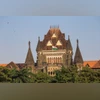
The Bombay High Court on Thursday declined urgent listing of a petition challenging the composition of the Sir Ratan Tata Trust (SRTT) board and the legality of its proposed May 8 meeting, while asking the petitioner to move the vacation bench (which begins sitting from Saturday) if immediate interim relief was required. A Bench of Chief Justice Shree Chandrashekhar and Justice Gautam Ankhad was informed by Senior Advocate Janak Dwarkadas, appearing for the trust, that caveats had already been lodged to ensure that no interim orders were passed without hearing the trust.
A caveat is a formal notice or warning filed in a court (usually in civil matters) by a party (the “caveator”) advising that no action or decision, such as an order or judgment, should be taken without giving them a chance to be heard. The petition, filed by 61-year-old Thane resident Suresh Tulsiram Patilkhede, seeks directions restraining the trustees from passing or implementing resolutions at the proposed board meeting and calls for reconstitution of the trust’s board in accordance with the Maharashtra Public Trusts Act, 1950.
The writ plea alleges that the Sir Ratan Tata Trust is functioning in violation of the Maharashtra Public Trusts Act, 1950, after amendments introduced in 2025 capped the number of “life trustees” in public trusts. The petition seeks directions to the Charity Commissioner and the trust to reconstitute the board of trustees of the Sir Ratan Tata Trust in accordance with Section 30A(2) of the Maharashtra Public Trusts Act. The plea contends that the trust, established in 1919 under the will and codicil of Sir Ratanji Jamsetji Tata, presently has six trustees, of whom three — Noel Tata, Jimmy Tata, and Jehangir H C Jehangir — are continuing as “life trustees”.
According to the petitioner, the Maharashtra Public Trust (Second Amendment) Act, 2025, which came into force on September 1, 2025, introduced Section 30A(2), providing that where the instrument of trust does not specifically permit appointment of perpetual or life trustees, such trustees cannot exceed one-fourth of the total strength of the board.
The petition argues that since the Sir Ratan Tata Trust has six trustees, only one trustee could legally continue as a life trustee under the amended law. It claims that the trust’s current composition, with three life trustees, amounts to a “clear and continuing violation” of the statute.
Also Read

 "Bombay High Court")
 "noel tata")
 "A man walks past the logo of TATA at its exhibitor stall at the India Mobile Congress 2025 at Yashobhoomi a convention and expo center in New Delhi, India, October 8, 2025| REUTERS")
 "JioStar vs CCI case, Bombay High Court writ petition JioStar, CCI jurisdiction dispute broadcasting, TRAI vs CCI regulatory overlap, Asianet Digital Network complaint, abuse of dominant position India, Competition Act investigation India, telecom reg")
The plea further states that the original will and codicil of Sir Ratanji Jamsetji Tata contain no provision for the appointment of trustees for life or perpetual trusteeship. It alleges that the practice of appointing life trustees was adopted internally by the trust much later, beginning with the appointment of Jimmy Tata in 1989, followed by Jehangir H C Jehangir and Noel Tata in 2019.
The petitioner has claimed that the amended provision contains a non-obstante clause overriding any “usage of the trust or any decision that the trustees may have taken”, thereby nullifying reliance on past practice.
The plea also alleges that representations were made to the Maharashtra Charity Commissioner on April 18 and April 30, 2026, requesting intervention and inquiry into the trust’s compliance with the amended law, but no action was taken. Seeking a writ of mandamus, the petition asks the High Court to direct the Charity Commissioner to initiate proceedings under the Maharashtra Public Trusts Act and ensure compliance with the statutory cap on life trustees.
A writ of mandamus is a court order directing a public official, government agency, or lower court to perform a mandatory legal duty they have failed or refused to do.
The petition further contends that decisions taken by a non-compliant board may be open to legal challenge and could be rendered void for being contrary to the statutory framework governing public trusts.
The controversy comes amid wider churn within Tata Trusts over governance and representation on the board of Tata Sons. Tata Trusts, which together hold a controlling stake in Tata Sons through Sir Dorabji Tata Trust and Sir Ratan Tata Trust, are expected to review their nominee representation on the Tata Sons board at the May 8 meeting. At present, Noel Tata and Venu Srinivasan represent the trusts on the Tata Sons board, while Vijay Singh stepped down from the board in September 2025 amid internal differences.
The proposed meeting is also expected to see discussions on whether Tata Sons should eventually pursue a public listing. While some trustees, including Venu Srinivasan and Vijay Singh, have reportedly favoured exploring a listing to improve transparency and support future capital requirements, Noel Tata is understood to prefer retaining Tata Sons as a closely held entity.
The debate gained prominence after RBI regulations on upper-layer NBFCs had briefly raised the prospect of a Tata Sons listing before the company reduced debt and sought deregistration from the category.
More From This Section
 "kidnapping, abduction")
 "Vijay, TVK")
 "Farmer suicide")
 "caste census India, OBC population data, caste representation debate, caste survey Bihar Telangana, SC ST job representation, caste-based reservation, Indian caste demographics, OBC underrepresentation, caste in public policy, 2026 caste census")
 "Yogi Adityanath, yogi, UP CM")
Topics : Bombay High Court Ratan Tata noel tata
Don't miss the most important news and views of the day. Get them on our Telegram channel
First Published: May 07 2026 | 8:11 PM IST