


Delhi air remains 'very poor' as non-BS VI private vehicles barred
GRAP Stage IV measures remain in force across Delhi-NCR as authorities bar non-BS VI private vehicles, enforce 'No PUC, No Fuel', tighten construction curbs and advise at least 50% work-from-home
 "Delhi Winter, New Delhi Winter, Winter, Cold, Smog, Delhi Pollution, Delhi Air Quality, Pollution")
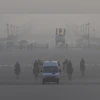
Authorities said enforcement is being supported by automatic number plate recognition cameras, voice alerts at petrol pumps, and police presence (Photo:PTI)


Listen to This Article
Delhi woke up to a thick blanket of toxic smog on Wednesday, with air quality index (AQI) across the capital remaining firmly in the ‘very poor’ category and several pockets slipping close to the ‘severe’ range.
According to data from the Central Pollution Control Board (CPCB), Anand Vihar recorded an AQI of 416 at 8 am, remaining in the ‘severe’ category. The city’s overall average AQI stood at 358, classified as ‘very poor’. Most monitoring stations reported readings between 300 and 400, while only five crossed the 400 mark.
GRAP Stage IV curbs in force
In response to the worsening pollution, the Commission for Air Quality Management (CAQM) has enforced all Stage IV measures under the Graded Response Action Plan (GRAP) across Delhi-NCR.
Under these restrictions, the entry of non-Delhi private vehicles that do not meet BS-VI emission norms has been barred. The ‘No PUC, No Fuel’ rule has also come into effect, with petrol pumps refusing fuel to vehicles without a valid pollution under control certificate.
Also Read

 "Smog, Delhi Pollution, Delhi Air Quality, Pollution")

 "Donald Trump, Trump")
 "Emigration, immigration, jobs abroad, indian students abroad")
 "UK protests, London, anti immigration")
VIDEO | To curb rising pollution and deteriorating air quality in the national capital, the Delhi government has enforced strict measures, including denying fuel to vehicles without a valid Pollution Under Control Certificate (PUCC). Visuals from Janpath petrol pump. The move… pic.twitter.com/ddU8lJbiWJ
— Press Trust of India (@PTI_News) December 18, 2025
Enforcement is being supported through automatic number plate recognition cameras, voice alerts at fuel stations and increased police deployment. Around 580 police personnel have been stationed at 126 checkpoints, including border entry points, while transport department teams have been deployed at petrol pumps to ensure compliance.
The restrictions do not apply to CNG or electric vehicles, public transport, or vehicles providing essential services. However, the entry of vehicles carrying construction material has been prohibited under GRAP Stage IV norms.
Supreme Court flags border congestion
The Supreme Court has raised concerns over congestion at Delhi’s border toll plazas, observing that long queues and idling vehicles were adding to emissions. A bench led by the Chief Justice asked the Municipal Corporation of Delhi (MCD) and the National Highways Authority of India (NHAI) to decide within a week whether toll collection at nine entry points could be temporarily suspended or relocated.
The court suggested shifting toll plazas to alternative locations managed by the NHAI, with a revenue-sharing mechanism to compensate for losses. It also directed the CAQM to review its action plan covering transport, industry, construction activity, stubble burning, household pollution and green cover.
Schools, offices and work-from-home
On the issue of reopening primary schools, the apex court declined to intervene, citing health concerns linked to pollution levels. The Delhi government has reiterated its advisory for private offices to function with at least 50 per cent work-from-home, warning of penalties for violations.
Authorities said GRAP Stage IV measures will remain in place until a sustained improvement in air quality is recorded.
More From This Section
 "MK Stalin, Stalin")
 "Indian Railways")
 "Mehul Choksi")
 "waqf bill, waqf property")
 "Parliament, New Parliament")
Topics : Air Quality Index Delhi air quality smog air pollution Delhi Pollution Delhi-NCR BS Web Reports
Don't miss the most important news and views of the day. Get them on our Telegram channel
First Published: Dec 18 2025 | 9:24 AM IST