


Air quality turns 'severe' in Delhi as smog thickens; AQI crosses 400 mark
Stubble smoke, low humidity and stagnant winds have trapped pollutants close to the surface, worsening Delhi's smog, with conditions expected to deteriorate further over the next 48 hours
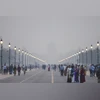 "Smog, Delhi Pollution, Delhi Air Quality, Pollution")
Residents in multiple neighbourhoods complained of eye irritation, respiratory discomfort, and reduced visibility amid dense smog (Photo:PTI)


Listen to This Article
As winter sets in, Delhi and the National Capital Region (NCR) are grappling with rapidly deteriorating air quality. Falling temperatures, persistent smog, and stagnant winds have combined to trap pollutants, pushing pollution levels to alarming highs.
According to the Central Pollution Control Board (CPCB), the Air Quality Index (AQI) at Anand Vihar touched 408 on Thursday, placing it in the ‘severe’ category. Several other monitoring stations across the city also reported ‘very poor’ to ‘severe’ air quality levels.
#WATCH | Delhi | The AQI at the Akshardham and the surrounding areas was recorded at 409 in the 'Severe' category as per the CPCB pic.twitter.com/SwLXlST6Mo
— ANI (@ANI) October 30, 2025
Also Read

 "anti smog gun, Smog, Delhi Pollution, Delhi Air Quality, Pollution")
 "Manjinder Singh Sirsa, Manjinder Singh")
 "Smog, Delhi Pollution, Delhi Air Quality, Pollution")
 "Smog, Delhi Pollution, Delhi Air Quality, Pollution")
 "Smog, Delhi Pollution, Delhi Air Quality, Pollution")
According to the CPCB, AQI above 400 is classified as ‘severe’ and affects the health of people drastically, especially those with existing respiratory conditions.
Cloud seeding fails, next attempt in few days
The spike comes shortly after the Delhi government attempted cloud seeding to induce artificial rainfall and reduce pollution. However, the trial, conducted on October 28, did not yield the expected results. A scheduled follow-up operation on October 29 was postponed due to insufficient moisture in the atmosphere.
Delhi Environment Minister Manjinder Singh Sirsa said that the next round of cloud seeding will be carried out only when humidity levels are adequate.
Meanwhile, residents in multiple neighbourhoods complained of eye irritation, respiratory discomfort, and reduced visibility amid dense smog. Municipal teams have deployed truck-mounted water sprinklers across major intersections and construction-heavy zones to control dust.
VIDEO | On Cloud seeding, Delhi Minister Manjinder Singh Sirsa (@mssirsa) said: "It was a successful and historical trial. The AAP government has been trying these trials for over 10 years but this time, the cloud seeding trial has achieved a new milestone under the leadership… pic.twitter.com/dJzPKmebER
— Press Trust of India (@PTI_News) October 29, 2025
Why is Delhi-NCR’s pollution rising?
The India Meteorological Department (IMD) said the region is currently under the influence of several weather systems. Cyclone Montha made landfall in Andhra Pradesh, while a Western Disturbance remains active over the northern hills. As a result, Delhi-NCR is likely to see cloudy skies, shallow mist, and light rain in isolated pockets.
Falling wind speeds could also be a key reason behind the pollution surge. Winds that earlier blew at around 14 kmph have now slowed to nearly 10 kmph, limiting the dispersal of pollutants. This has caused particulate matter to accumulate closer to the surface, worsening smog conditions.
Today’s Delhi-NCR weather forecast
IMD data shows that minimum temperatures are hovering between 17 degrees Celsius and 18 degrees Celsius, slightly above normal by 1-3 degrees Celsius, while maximum temperatures remain between 28 degrees Celsius and 29 degrees Celsius, around 2 to 4 degrees Celsius below normal. North-westerly winds prevailed over the past 24 hours at speeds of up to 10 kmph.
Mist and haze are likely to persist during morning hours for the next five days, according to the IMD, keeping air quality concerns elevated across the region.
More From This Section
 "boat capsized, boat")
 "Allahabad High Court")
 "pollution, stubble burning")
 "Cloud Speeding")
 "Piyush Goyal, Piyush")
Topics : Air Quality Index Delhi air quality air pollution smog IMD weather forecast Delhi-NCR BS Web Reports
Don't miss the most important news and views of the day. Get them on our Telegram channel
First Published: Oct 30 2025 | 9:41 AM IST