


Hathras stampede: Judicial report submitted, to be tabled in UP Assembly
The Hathras Stampede, which occurred in July 2024, resulted in 121 deaths, including 112 women and at least seven children
 "Hathras stampede, Hathras Incident")
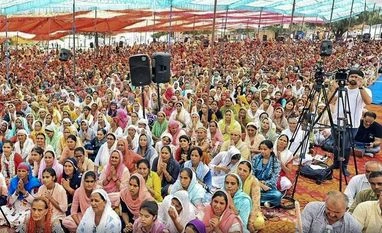
Hathras: Devotees at the religious gathering where a stampede broke out, in Hathras district on July 2, 2024 (Photo: PTI)
Listen to This Article
The judicial report on the 2024 Hathras stampede, which resulted in the deaths of 121 people, has been handed over to the Uttar Pradesh government. The report is expected to be presented in the Legislative Assembly during the ongoing budget session following the state cabinet’s approval.
Hathras stampede
The stampede occurred on July 2, 2024 in Fulari village, Hathras, during a Satsang (religious gathering) led by self-styled godman Bhole Baba, also known as Suraj Pal. According to official figures, the disaster claimed the lives of 121 individuals, including 112 women and at least seven children, while over 80 others sustained injuries and were hospitalised.
The incident unfolded as an overwhelming crowd of more than 200,000 devotees attended the gathering, despite the event having permission for only 80,000 attendees.
Bhole Baba, a Dalit religious leader, has amassed a significant following, particularly among individuals from socially disadvantaged backgrounds, many of whom are women and economically marginalised.
The incident took place as devotees attempted to leave the makeshift tent where the prayer meeting was being held. Chaos ensued when Bhole Baba left the stage and moved towards his vehicle. Scores of followers rushed towards him in an attempt to touch his feet or the ground he had walked on, resulting in a deadly stampede.
Also Read

 "Hathras stampede, Hathras Incident")
 "Rahul Gandhi, Rahul, congress leader")
 "Supreme Court, SC")
 "Hathras stampede, Hathras Incident")
 "crime scene")
Experts attribute the catastrophe to inadequate crowd control measures by event organisers and insufficient oversight by local authorities.
Chargesheet filed against 11
The Uttar Pradesh Police has submitted a 3,200-page chargesheet against 11 individuals in connection with the incident. However, the name of Suraj Pal, alias Bhole Baba, who organised the event, is conspicuously absent from the chargesheet, as noted by defence lawyer AP Singh.
PIL seeks status report on Hathras stampede
On July 12, 2024, the Supreme Court declined to entertain a Public Interest Litigation (PIL) seeking the formation of a five-member expert committee under a retired apex court judge to probe the incident. Then Chief Justice of India D Y Chandrachud acknowledged the gravity of the situation but directed the petitioner to approach the High Court instead, asserting that it was well-equipped to handle the case.
The PIL had urged the court to instruct the Uttar Pradesh government to submit a status report on the incident and to take legal action against those responsible for negligence. Additionally, the petition called for nationwide safety guidelines for large public gatherings to prevent similar tragedies in the future.
Authorities have yet to confirm whether any additional action will be taken against those named in the chargesheet. Meanwhile, the families of the victims continue to seek justice and improved safety measures to prevent such tragedies in the future.
Regulations on religious gatherings
Following the incident, legal experts and civil society members have urged the government to establish stricter regulations for managing large religious gatherings. While the judicial report's findings remain undisclosed, its presentation in the legislative Assembly is expected to provide further insight into the causes and accountability for the disaster.
On January 29, Prayag Maha Kumbh also witnessed stampedes. Thousands of devotees have been flocking to the city to attend the religious event that takes place once every 12 years. At least 30 people were killed while 90 others injured in the crowd. Hours later a second incident led to the death of at least seven people, including three women and a three-year-old child. Conflicting reports have emerged on the exact death toll, however, the incident once emphasises the need for better crowd controls and religious event management in the country.
[With agency inputs]
More From This Section
 "EAM S Jaishankar with Ukrainian counterpart Andrii Sybiha")
 "Congress general secretary, Jairam Ramesh")
 "Parliament, New Parliament, Lok sabha, Rajya sabha")
 "Sourav Ganguly, Sourav, Ganguly")
 "human trafficking, harassment, children violence")
Topics : Hathras case Angola football stadium stampede Uttar Pradesh Uttar Pradesh government BS Web Reports
Don't miss the most important news and views of the day. Get them on our Telegram channel
First Published: Feb 21 2025 | 12:25 PM IST