


Mumbai enforces Grap-IV measures as AQI worsens: How it differs from Delhi
Mumbai enforces Grap-IV curbs as air quality worsens in several areas; construction, industries checked, flying squads deployed
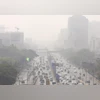 "Mumbai Pollution, Smog, Pollution")
Special flying squads, comprising engineers, police teams and GPS-enabled vehicles, are inspecting every ward to enforce pollution norms. (Photo: PTI)
Listen to This Article
Mumbai’s air quality has dipped sharply in recent days, prompting the Brihanmumbai Municipal Corporation (BMC) to enforce the strictest level of pollution control measures under the Graded Response Action Plan (Grap-IV). These curbs apply to neighbourhoods that have recorded ‘very poor’ to ‘severe’ Air Quality Index (AQI) levels, causing discomfort for residents, NDTV reported.
The move comes after varying air quality levels in the city, with the Central Pollution Control Board (CPCB) reporting Mumbai’s AQI at 111, classified as 'moderate' on Monday, though some areas had earlier recorded 'severe' pollution levels.
Grap-IV in Mumbai: What it includes
• The BMC will have to stop construction and other dust-creating activities in affected zones. Dozens of sites are under watch.
• Stop-work or shutdown notices have been issued to 50 construction and Ready-Mix Concrete (RMC) sites in the worst-hit wards.
• Small industries such as bakeries, marble-cutting units and other establishments have been told to shift to cleaner processes or face penalties.
Also Read

 "Delhi Winter, New Delhi Winter, Winter, Cold, Smog, Delhi Pollution, Delhi Air Quality, Pollution")
 "Hands off Greenland protests")
 "Eknath Shinde, Eknath, Maharashtra CM")
 "Iran, Iran flag")
 "Twitter, X, social media")
• Special flying squads, comprising engineers, police teams and GPS-enabled vehicles, are inspecting every ward to enforce pollution norms.
• Out of 70 sites checked, 53 were found violating dust-control rules and have been issued notices.
Mumbai vs Delhi: How Grap-IV rules differ
Mumbai has now joined Delhi in struggling with toxic air. Over the past few weeks, several stations in Mumbai have reported AQI levels between 200-300, driven mainly by PM2.5 and PM10. The BMC triggered Grap-IV despite the city’s pollution being comparatively lower than Delhi’s, where AQI has hovered around 300-400.
Delhi’s Grap-IV rules include:
• Ban on BS-III petrol and BS-IV diesel 4-wheelers.
• Schools move to hybrid mode, except for Classes 10 and 12.
• Private firms are advised to offer work-from-home, while government offices operate at 50 per cent capacity.
• Entry of truck traffic into the city is barred.
• BS-III petrol and BS-IV diesel cars are also restricted in NCR districts.
Delhi’s air quality slips to ‘very poor’
Delhi’s air quality worsened sharply on Monday, sliding from ‘poor’ to ‘very poor’ as most locations logged AQI readings above 300. A thin layer of fog reduced visibility while trapping pollutants close to the ground.
According to the Central Pollution Control Board (CPCB):
• Anand Vihar recorded an AQI of 327, putting it in the ‘very poor’ category.
• Nehru Nagar in South Delhi was the most polluted neighbourhood, with an AQI of 351.
• NSIT Dwarka saw a much lower AQI of 195, placing it in the ‘moderate’ range.
In the surrounding NCR region, Noida was the most polluted with an AQI of 316, Faridabad recorded 208 (‘poor’), Greater Noida (288) and Ghaziabad (291) remained in the ‘poor’ range.
More From This Section
 "Polling officials, EVM, Election")
 "Nirmala Sitharaman, Nirmala")
 "Yogi Adityanath, yogi, UP CM")
 "Union Finance Minister Nirmala Sitharaman speaks during the first day of the Winter Session of Parliament, in New Delhi, Monday, Dec. 1, 2025. (Sansad TV via PTI Photo)")
 "power outage")
Don't miss the most important news and views of the day. Get them on our Telegram channel
First Published: Dec 01 2025 | 3:36 PM IST